Industry Representatives Make Their Case To House Transportation Subcommittee
Industry experts told a House committee Wednesday that unmanned systems are improving the efficiency, safety and security of maritime transportation and Coast Guard operations. Entitled “How to Improve the Efficiency, Safety, and Security of Maritime Transportation: Better Use and Integration of Maritime Domain Awareness Data,” the hearing before the House Transportation and Infrastructure Subcommittee on Coast Guard and Maritime Transportation featured industry experts, government officials and academics testifying on U.S. Coast Guard maritime domain awareness (MDA) programs, including the use of UAS.
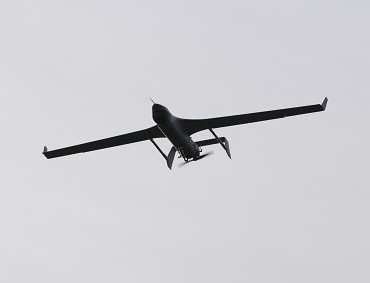
Steve Morrow, president & CEO of Insitu, a subsidiary of Boeing, testified on behalf of the Association for Unmanned Vehicle Systems International (AUVSI). Morrow highlighted the enormous potential unmanned aircraft systems (UAS) hold to increase the reach and efficiency of current maritime systems while reducing the risk of the operations.
At the hearing Morrow testified, “UAS have the ability to access and survey vast expanses of our oceans and rivers to supplement the capabilities of manned vehicles and other platforms. The critical situational awareness that UAS provide could support search and rescue operations, anti-drug or anti-smuggling operations, environmental protection, anti-piracy operations and many other missions. In these missions, UAS are capable of saving time, saving money and most importantly, saving lives.”
The UAS industry also provides an opportunity for economic growth and job creation. A study by AUVSI found that the unmanned aircraft industry is poised to create more than 70,000 jobs in the first three years following the integration of UAS into the national airspace. By 2025, that number is estimated to rise to 103,776 new jobs – with an economic impact of more than $82.1 billion over that period.
In addition Bill Vass, president & CEO of Liquid Robotics, Inc., also painted a vibrant picture for the future of unmanned systems in maritime.
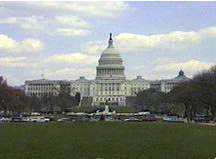
“Around the globe, defense departments, coastal defense forces, and oil & gas companies are faced with the daunting challenge to continuously protect and secure vast coverage areas with limited resources and shrinking budgets. The ability to have real time maritime information can be the difference between life and death, the difference between apprehending smugglers and the difference between avoiding an environmental catastrophe. The overwhelming barrier has been providing affordable, persistent or long duration, multi-sensor data for the monitoring, detection and tracking of maritime targets and conditions. … To have this level of maritime awareness requires mobile, unmanned resources at the surface of the ocean collecting data from subsea sensors, collecting surface data and sharing this information amongst trusted organizations - in real time.”
In maritime settings specifically, unmanned systems can reach higher vantage points and survey vast expanses of water where a boat might be adrift or crew missing. Bad weather and difficult terrain can prolong search and rescue efforts, lowering chances for survival while raising the financial cost. However, unmanned systems make searching for those lost at sea cheaper, faster and safer than using helicopters and manned vessels. In recent months, the U.S. Coast Guard has been testing UAS capabilities to learn how the technology can improve situational awareness and identify threats.
“There should be no doubt that the future of maritime domain awareness should and will include unmanned aircraft,” Morrow affirmed in his testimony.



 ANN's Daily Aero-Term (11.28.25): Unmanned Aircraft System (UAS)


 See All