USAF Herds Fighters Around The World
From a spectator's point of view, a Coronet mission may seem
simple; a group of tankers flies with a group of fighters across
the ocean, ensuring the smaller aircraft have enough fuel to get
home. Beyond that first glance, however, the "air bridge" is a
complicated, critical mission which takes precise planning and
coordination to complete. It's also a mission the 100th Air
Refueling Wing members perform several times a week.
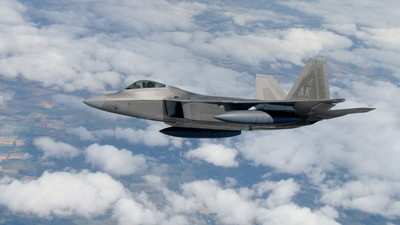
The term Coronet refers specifically to a movement of fighter
aircraft, such as the F-22 Raptor, said Lt. Col. Jonathan
Castellanos, the 351st Air Refueling Squadron director of
operations. While heavy aircraft are refueled during their flights
between continents, Coronets are specialized missions designed to
let fighters traverse long distances safely.
Fighters move for a variety of reasons, the colonel said. Planes
must be rotated in an out of the operational theaters to avoid
overuse, meet maintenance requirements and, in some cases, stay
with the units to which they're assigned.
While the intent is essentially the same as any other air
refueling flight, allow aircraft to take on more gas without having
to land, the procedure for a Coronet is different.
On a standard refueling sortie, a tanker will enter an orbit in
an area of sky set aside for them. Fighters scheduled to refuel
with the tanker know where it is and go to them, Colonel
Castellanos said.
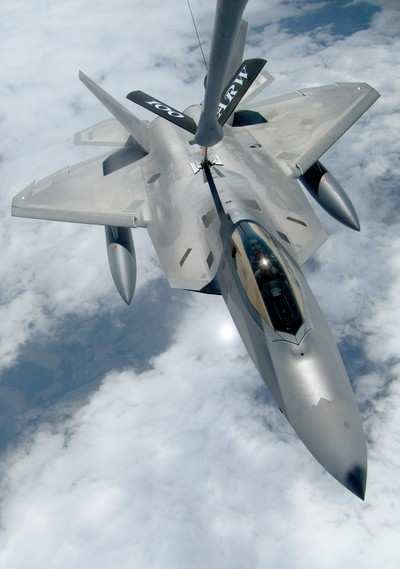
With a Coronet, the airspace designated for refueling moves with
the group of aircraft and takes more coordination to avoid mishaps.
Planes must be at precise coordinates and altitudes at the exact
time scheduled for the mission to be a success.
In a standard air refueling mission, a receiver may take off,
meet up with the tanker for fuel, and then leave for their mission.
Coronet fighters must top off several times during the flight.
 In the event a fighter must leave the tanker and land, they
have to have enough fuel to get to a predetermined divert base.
Maintenance issues, mission requirements and weather can affect
which bases are available, so precise timing is required to ensure
the fighters have the correct amount of fuel at certain points in
the flight.
In the event a fighter must leave the tanker and land, they
have to have enough fuel to get to a predetermined divert base.
Maintenance issues, mission requirements and weather can affect
which bases are available, so precise timing is required to ensure
the fighters have the correct amount of fuel at certain points in
the flight.
Usually, tankers from the 100th ARW will take fighters to a
certain point and hand them over to another tanker to complete the
journey. Depending on mission requirements, the KC-135 Stratotanker
crew may stop somewhere overnight or return to Royal Air Force
Mildenhall. On a recent Coronet during which KC-135 crews "dragged"
F-22s across the Atlantic, the crew stopped overnight in Iceland to
refuel and meet crew rest requirements.
While home, tanker crews based here have a unique role - they
are "deployed in place," Colonel Castellanos said.
"When these Airmen go up to fly, they aren't just training or
practicing for a deployment," he said. "They're doing their actual
mission, and they do it 24 hours a day, seven days a week."
Despite the simple outward appearance of the air bridge, the
crucial Coronet mission is an intensely precise cooperative effort,
ensuring the fuel gets to the fighters no matter how far they need
to go. [ANN Salutes Staff Sgt. Austin M. May, 100th Air Refueling
Wing Public Affairs]



 Classic Aero-TV: VerdeGo Debuts VH-3 Hybrid-Electric Powerplant


 See All