Wed, May 08, 2013
Increases Ratio To One Flight Attendant For Every 50 Passenger Seats
Transport Canada has granted permission for WestJet to employ a ratio of one flight attendant for every 50 passenger seats onboard an aircraft. "The safety of Canadians is Transport Canada's top priority," said the Honourable Denis Lebel, Minister of Transport, Infrastructure and Communities. "The department has considered WestJet's request carefully and is confident that the same levels of safety will be maintained."
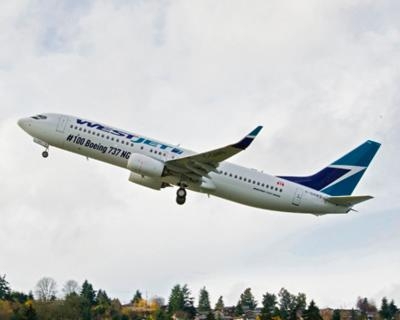
The Canadian Aviation Regulations currently require one flight attendant for every 40 passengers present on board an aircraft. However, for certain eligible aircraft configured with up to 50 passenger seats, only one flight attendant is required. This exemption aligns WestJet with international standards as airlines based in the United States and other jurisdictions operate with one flight attendant for every 50 passenger seats, and they are currently flying to and from Canada with this ratio.
"This decision will make WestJet more competitive with U.S. airlines while maintaining a high safety standard," said Minister Lebel.
"One flight attendant for every 50 seats is the accepted international practice and has been in place for decades around the world," said Saretsky, WestJet President and CEO. "This exemption will place us on a level regulatory playing field with U.S. and international carriers who fly in and out of Canada every day under these rules. Safety is a core value at WestJet and we commend the government for recognizing that there is a consistent level of safety operating under this ratio."
"WestJet has committed that it will not lay off any flight attendants under this new exemption," said Antonio Faiola, WestJet Flight Attendant and Chair of PACT, WestJet's employee association. "Our history speaks for itself: WestJet has always worked with its employees when our business changes and this is another example of its commitment to its people."
"We anticipate cost savings once this exemption has been operationalized across our network," Saretsky said. "These savings will allow us to grow our network and continue to provide low fares for the Canadian traveller. We will now work with our operations teams to determine when we can implement these changes which will in turn determine when these savings will be realized."
All air operators are entitled to make an exemption request to Transport Canada and every request is given equal consideration and assessed on its own merit. Transport Canada will begin work on a regulatory change so that airlines can meet this internationally-recognized standard without seeking an exemption.
More News
Dave Juwel's Aviation Marketing Stories ITBOA BNITBOB ... what does that mean? It's not gibberish, it's a lengthy acronym for "In The Business Of Aviation ... But Not In The Busine>[...]
The Pilot Attempted Several Times To Restart The Engine And Diverted To Long Beach Airport/Daughtery Field On October 20, 2025, about 1603 Pacific daylight time, an experimental am>[...]
Hazardous Weather Information Summary of significant meteorological information (SIGMET/WS), convective significant meteorological information (convective SIGMET/WST), urgent pilot>[...]
"The latest development underscores the government of Malaysia’s commitment in providing closure to the families affected by this tragedy..." Source: From statements made by >[...]
Also: IAE Acquires Diamond Trainers, Army Drones, FedEx Pilots Warning, DA62 MPP To Dresden Tech Uni The danger to the flight training industry and our future pilots is clear. Dona>[...]



 Aero-FAQ: Dave Juwel's Aviation Marketing Stories -- ITBOA BNITBOB


 See All