Low-Flying UAV To Scout Ahead Of Troops
The Defense Advanced
Research Projects Agency (DARPA) Monday awarded funding to three
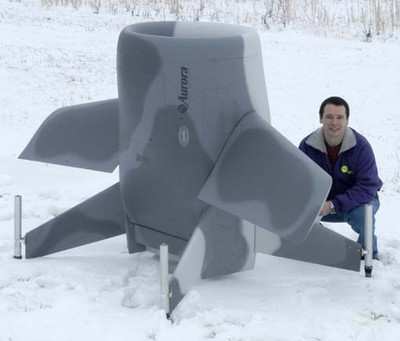
contractors for the first phase of the Organic Air Vehicle –
II (OAV-II) program to develop a prototype ducted fan Class II
unmanned aerial vehicle for the Army’s Future Force Unit of
Action.
The three contractors receiving OAV-II phase I awards are:
- Aurora Flight Sciences Inc., Manassas, VA,
- BAE Systems Aircraft Controls Inc., Los Angeles, CA
- Honeywell International Inc., Defense and Space Electronics
Systems, Albuquerque, NM
The OAV-II program will develop and demonstrate a company-level
ducted fan unmanned aerial vehicle (UAV) for operation in diverse
missions such as complex environment reconnaissance and
surveillance; path finding for friendly ground vehicles (both
robotic and manned); maneuver force protection; and targeting for
non-line-of-sight fire operations. At the end of the three-phased
program, the prototype OAV-II vehicle should be of sufficient
maturity to transition into an Army System Development and
Demonstration program to fulfill the Army’s requirement for a
Class II UAV.
The prototype OAV-II vehicle will have a dry weight of less than
112 pounds and will be a platform to demonstrate advanced sensors
for situational awareness and target designation, a
nonline-of-sight networked communications capability, and collision
avoidance. The vehicle will use advanced heavy fuel propulsion and
will incorporate advanced acoustic signature reduction technology.
The prototype vehicle will be designed to provide small units with
a capability to perform reconnaissance, surveillance and target
acquisition (RSTA) missions of up to two hours’ duration and
at ranges of tens of kilometers.
During the OAV-II program’s initial six-month phase,
contractors will perform design trades and will determine technical
requirements for the major subsystems of the air vehicle.
Contractors will also study optimum system size and performance,
and demonstrate the highest risk elements of the collision
avoidance subsystem in a laboratory test. Phase I will culminate
with a preliminary design review, after which DARPA will select up
to two of the contractors to continue into phase II.
During the nine-month second phase, contractors will perform
detailed design of the OAV-II air vehicle and ground support
elements (control station and ground vehicle interfaces). The
program will continue development of the collision avoidance system
and demonstrate a non-form-factored collision avoidance system in
flight tests on a surrogate air vehicle.
Contractors will also design the heavy fuel engine. Phase II
will culminate in a critical design review. The program will choose
a single contractor for phase III.
Phase III will last 33 months. During the first 18 months, the
OAV-II contractor will fabricate, integrate, and test the air
vehicle, and demonstrate basic collision avoidance functionality.
The program will conduct flight tests using surrogate sensors in
place of the Class II Mission Equipment Package (MEP), which the
Army Communications and Electronics Research, Development and
Engineering Center Night Vision and Electronic Sensors Directorate
(Fort Belvoir, VA) will be developing in a parallel program. During
the final 15 months of the OAV-II program, the contractor will
integrate the Army’s developmental Class II MEP elements into
the air vehicle and perform flight testing to demonstrate full
functional collision avoidance (avoidance of buildings, trees and
wires), RSTA, target designation, networked communications and
autonomous operations.



 Aero-FAQ: Dave Juwel's Aviation Marketing Stories -- ITBOA BNITBOB


 See All