Thu, May 09, 2013
Winglets To Be Added To 767 Aircraft To Save Fuel, Reduce Emissions
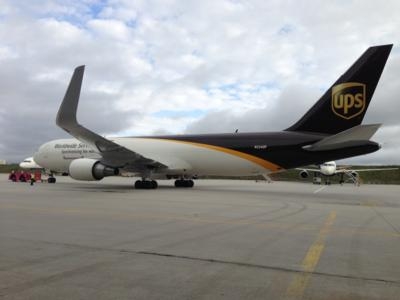
The flagship Boeing 767 fleet operated by UPS is being modified with winglets as a part of the company's sustainability efforts to save fuel and reduce emissions. These wingtip devices are designed to enhance the overall efficiency of the aircraft, saving fuel by reducing drag while also lowering noise emissions by improving take-off performance. UPS says the modifications will save the company more than six million gallons of fuel each year and reduce carbon dioxide emissions by more than 62,000 metric tonnes. UPS estimates approximately a four percent fuel savings on each 767 flight.
“UPS continues to lead the industry in sustainable business practices,” said David Abney, UPS chief operating officer. “With the widest portfolio of services in the industry, we are constantly looking for ways to reduce emissions, and drive down operating costs so our customers have the solutions they need to compete in a global economy. These winglets are a perfect example of sustainability in action. They are good business and good stewardship.”
UPS currently operates 54 of the 767 aircraft with five on order. The company plans to have winglets on all 767 aircraft by the end of 2014. Winglets are already installed on UPS’s 747, and MD-11 fleets, and the A300-600 has a similar device called a wingtip fence.
The modifications will add approximately five and a half feet of span to each wing, and each winglet is 11 feet tall. Aircraft weight will increase by nearly 3,000 pounds due to the weight of the winglets and the extensive structural reinforcement of the wing structure. Even at this size and weight, the winglets will still reduce the amount of fuel used per flight.
Winglets improve the aerodynamics of the wing by extending the length of the wing and reducing the amount of drag.
The winglet project is a sustainability initiative implemented by UPS Airlines. “We believe there is always some way you can improve, and we’re applying that spirit to our environmental efforts,” said UPS Airlines President Mitch Nichols. “This is a great example of how we can use existing technology to save money, lessen our impact on the environment and serve our customers more efficiently.”
More News
After Draining Both Wing Fuel Tanks, A Significant Amount Of Water Was Observed In The Right Wing Fuel Tank Analysis: The pilot, who was also the owner of the experimental amateur->[...]
“Airbus apologises for any challenges and delays caused to passengers and airlines by this event. The Company thanks its customers, the authorities, its employees and all rel>[...]
High Speed Taxiway A long radius taxiway designed and provided with lighting or marking to define the path of aircraft, traveling at high speed (up to 60 knots), from the runway ce>[...]
Aero Linx: Taylorcraft Foundation, Inc. The Taylorcraft Foundation is exclusively organized for charitable, educational & scientific activities and will preserve the history an>[...]
Also: USAF Reaper Accident, Baikonur Damage, Horizon eVTOL IFR/FIKI, New Glenn Update Honda has outlined its clearest timeline yet for its entry into the world of electric vertical>[...]



 NTSB Final Report: Patriot Aircraft LLC CX1900A


 See All