
Brazil Will Require Nearly 1,100 New Aircraft In Next 20 Years | Aero-News Network
Aero-News Network
RSS icon RSS feed
podcast icon MP3 podcast
Subscribe Aero-News e-mail Newsletter Subscribe

Airborne Unlimited -- Most Recent Daily Episodes

Episode Date

Airborne-Monday

Airborne-Tuesday

Airborne-Wednesday Airborne-Thursday

Airborne-Friday

Airborne On YouTube

Airborne-Unlimited-12.08.25

AirborneNextGen-
12.02.25

Airborne-Unlimited-12.03.25

Airborne-FltTraining-12.04.25

AirborneUnlimited-12.05.25

AFE 2025 LIVE MOSAIC Town Hall (Archived): www.airborne-live.net

Fri, Nov 09, 2012

Brazil Will Require Nearly 1,100 New Aircraft In Next 20 Years

World’s Fourth Largest Passenger Traffic Market Expects Demand Worth $160 Billion

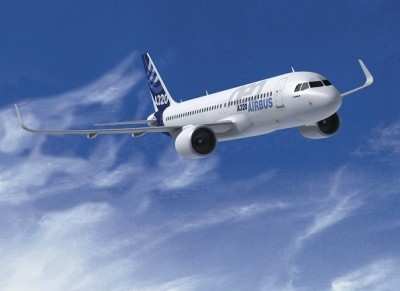
According to the latest Airbus Global Market Forecast (GMF), Brazil will need 1,060 new aircraft between 2012 and 2031. The projected 700 single-aisle, 310 twin-aisle and 50 very large aircraft have an estimated current market value of $160.7 billion and are expected to help meet the demand of domestic and foreign carriers as well as addressing the country’s rapidly growing air travel market.

With a GDP currently growing above the world average, socioeconomic indicators predict Brazil’s economy to more than double over the next 20 years. The country’s domestic air traffic market, has doubled since 2006, helping make Brazil the fourth largest passenger traffic market worldwide, following the US, China and Japan.

International traffic has grown by 34 percent since 2009, with foreign carriers largely making up the increased market share. As a key destination for international tourism and one of the world’s top 10 metropolitan areas, more than a third of long-haul traffic to Latin America arrives through Brazil, making Sao Paulo and Rio de Janeiro the region’s major gateways. To address increased demand, very large aircraft are now poised to meet international air traffic requirements needed to serve long-haul flights to Brazil.

According to the World Travel and Tourism Council, Brazil’s tourism industry is and will remain an important contributor to the economy, with more than 5 percent contribution to the country’s GDP and nearly 3 percent contribution to its employment.

According to the Airbus GMF, in the next 20 years Latin American airlines will require more than 2,100 new aircraft, including 1,660 single-aisle, 420 twin-aisle and 40 very large aircraft, estimated at approximately $242 billion. Globally, by 2031 some 28,200 new aircraft valued at $4.0 trillion will be required to satisfy future robust market demand.

FMI: www.airbus.com

Advertisement

More News

NTSB Final Report: Patriot Aircraft LLC CX1900A

After Draining Both Wing Fuel Tanks, A Significant Amount Of Water Was Observed In The Right Wing Fuel Tank Analysis: The pilot, who was also the owner of the experimental amateur->[...]

Aero-News: Quote of the Day (12.06.25)

“Airbus apologises for any challenges and delays caused to passengers and airlines by this event. The Company thanks its customers, the authorities, its employees and all rel>[...]

ANN's Daily Aero-Term (12.06.25): High Speed Taxiway

High Speed Taxiway A long radius taxiway designed and provided with lighting or marking to define the path of aircraft, traveling at high speed (up to 60 knots), from the runway ce>[...]

ANN's Daily Aero-Linx (12.06.25)

Aero Linx: Taylorcraft Foundation, Inc. The Taylorcraft Foundation is exclusively organized for charitable, educational & scientific activities and will preserve the history an>[...]

Airborne-NextGen 12.02.25: Honda eVTOL, Arctus High-Alt UAS, Samson Patent

Also: USAF Reaper Accident, Baikonur Damage, Horizon eVTOL IFR/FIKI, New Glenn Update Honda has outlined its clearest timeline yet for its entry into the world of electric vertical>[...]

blog comments powered by Disqus



Advertisement

Advertisement

Podcasts

Advertisement

© 2007 - 2025 Web Development & Design by Pauli Systems, LC

