
LEAP Engine Setting New Standard For Commercial Aviation | Aero-News Network
Aero-News Network
RSS icon RSS feed
podcast icon MP3 podcast
Subscribe Aero-News e-mail Newsletter Subscribe

Airborne Unlimited -- Most Recent Daily Episodes

Episode Date

Airborne-Monday

Airborne-Tuesday

Airborne-Wednesday Airborne-Thursday

Airborne-Friday

Airborne On YouTube

Airborne-Unlimited-12.01.25

AirborneNextGen-
12.02.25

Airborne-Unlimited-12.03.25

Airborne-FltTraining-12.04.25

AirborneUnlimited-12.05.25

AFE 2025 LIVE MOSAIC Town Hall (Archived): www.airborne-live.net

Tue, Aug 08, 2017

LEAP Engine Setting New Standard For Commercial Aviation

Celebrating One Year Of Very Successful Airline Service

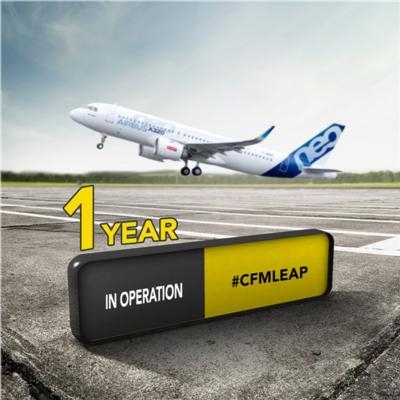
CFM International's advanced LEAP engine is setting new industry standards for fuel efficiency and asset utilization as the company celebrates the one-year anniversary of its entry into commercial service.

The first LEAP-powered commercial flight happened on August 2, 2016 on a Pegasus Airlines flight from Istanbul to Antalya.   Since then, more than 75 LEAP-powered aircraft have entered service with a total of 15 operators on four continents.  In addition to Pegasus, AirAsia, Air India, Avianca Brazil, Azul, Citilink, easyJet, Frontier, Interjet, Nova Airlines, SAS, SriLankan, Virgin America, Vistara, and WOW air have all taken delivery of at least one LEAP-powered airplane.  Overall, this fleet has logged more than 200,000 flight hours and 100,000 flight cycles.

"The LEAP engine entry into service is the most successful in our history and has been exceptional by any measure," said Gaël Méheust, president and CEO of CFM International.  "Our customers are thrilled with the fuel efficiency the engines is providing, as well as the world-class utilization level they are achieving with this very important asset. Aircraft powered by the LEAP engine are flying more than 95 percent of available days. This is simply unprecedented for a new engine."

The LEAP is providing operators a 15 percent improvement in fuel consumption and CO2 emissions compared to today's best CFM engine, along with dramatic reductions in engine noise.  All this technology is focused on providing better utilization, including CFM's legendary reliability out of the box; greater asset availability; enhanced time on wing margins to help keep maintenance costs low; and minimized maintenance actions, all supported by sophisticated analytics that enable CFM to provide tailored, predictive maintenance over the life of the product.

(Image provided with CFM International news release)

FMI: www.safran-group.com

Advertisement

More News

Aero-FAQ: Dave Juwel's Aviation Marketing Stories -- ITBOA BNITBOB

Dave Juwel's Aviation Marketing Stories ITBOA BNITBOB ... what does that mean? It's not gibberish, it's a lengthy acronym for "In The Business Of Aviation ... But Not In The Busine>[...]

NTSB Prelim: Rutan Long-EZ

The Pilot Attempted Several Times To Restart The Engine And Diverted To Long Beach Airport/Daughtery Field On October 20, 2025, about 1603 Pacific daylight time, an experimental am>[...]

ANN's Daily Aero-Term (12.05.25): Hazardous Weather Information

Hazardous Weather Information Summary of significant meteorological information (SIGMET/WS), convective significant meteorological information (convective SIGMET/WST), urgent pilot>[...]

Aero-News: Quote of the Day (12.05.25)

"The latest development underscores the government of Malaysia’s commitment in providing closure to the families affected by this tragedy..." Source: From statements made by >[...]

Airborne-Flight Training 12.04.25: Ldg Fee Danger, Av Mental Health, PC-7 MKX

Also: IAE Acquires Diamond Trainers, Army Drones, FedEx Pilots Warning, DA62 MPP To Dresden Tech Uni The danger to the flight training industry and our future pilots is clear. Dona>[...]

blog comments powered by Disqus



Advertisement

Advertisement

Podcasts

Advertisement

© 2007 - 2025 Web Development & Design by Pauli Systems, LC

