
Biology and Robotics Occupy ISS Crew | Aero-News Network
Aero-News Network
RSS icon RSS feed
podcast icon MP3 podcast
Subscribe Aero-News e-mail Newsletter Subscribe

Airborne Unlimited -- Most Recent Daily Episodes

Episode Date

Airborne-Monday

Airborne-Tuesday

Airborne-Wednesday Airborne-Thursday

Airborne-Friday

Airborne On YouTube

Airborne-Unlimited-11.24.25

AirborneNextGen-
11.18.25

Airborne-Unlimited-11.19.25

Airborne-AffordableFlyers-11.20.25

AirborneUnlimited-11.21.25

LIVE MOSAIC Town Hall (Archived): www.airborne-live.net

Thu, Feb 23, 2023

Biology and Robotics Occupy ISS Crew

At Station-Keeping

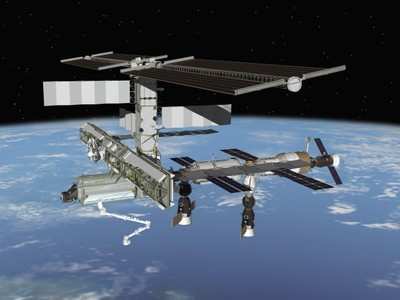
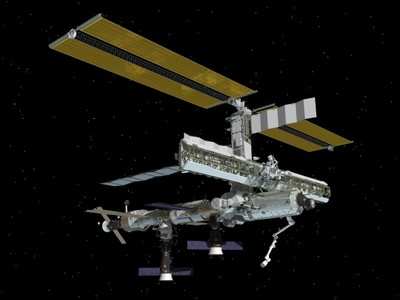
Last week, astronauts and engineers aboard the International Space Station (ISS) undertook a series of advanced microgravity experiments by which the whole of humankind may one day benefit.

Personnel of the space station’s Expedition 68—which comprises American astronauts Frank Rubio and Nicole Mann; NASA flight engineer Josh Cassada; Russian cosmonauts Sergey Prokopyev and Dmitri Petelin, flight engineer Anna Kikina; and the Japan Aerospace Exploration Agency's Koichi Wakata—investigated the effects of microgravity on human physiology, in particular, the sensory and neuromotor mechanics of reaching and grasping for objects in space.

Josh Cassada occupied himself observing and gauging the means by which ISS personnel regulate grip force. The NASA flight engineer’s work stands to shed light on the extent to which hand-eye coordination is affected by the sensory and kinesthetic realities of spaceflight.

Flight Engineer Koichi Wakata of Japan’s Aerospace Exploration Agency (JAXA) also took part in the space adaptation study, joining Cassada inside the ISS’s Columbus module where the two men took turns donning a virtual-reality (VR) headset and responding to synthetic stimuli. Observations of Cassada’s and Wakata’s VR sessions may inform earthbound researchers of the human brain’s adjustments to microgravity, and ultimately aid in the diagnosis and treatment of vestibular and neurological pathologies by which balance and orientation are affected.

Elsewhere aboard the ISS, NASA astronauts Frank Rubio and Nicole Mann adorned themselves in garments bristling with sensors, and pedaled stationary bikes for purpose of collecting data germane to blood-pressure and respiration. Their efforts were expended in service of the Cardiobreath investigation, which sets out to measure exercise output in microgravity in the hope of improving medical support for ISS crews and humans on Earth.

Mann and Cassada later utilized an ultrasound device to obtain vascular scans of each other’s necks, shoulders, and lower extremities.

To collect station sound levels key to yet another study, Rubio installed an acoustic monitoring device on an Astrobee robotic helper.

Astrobee is a free-flying robot designed to operate within the ISS. By undertaking routine duties, the station’s complement of three Astrobee robots allows the orbital facility’s human crew-members to focus on more complex and critical tasks.

Meanwhile, cosmonaut Sergey Prokopyev joined his Roscosmos counterpart Dmitri Petelin in reviewing procedures for the upcoming undocking of the ISS Progress 82 cargo craft.

Finally, flight engineer Anna Kikina, after starting her day working on electronics maintenance, bedecked herself in a sensor array of her own and took to the Zvezda service module’s treadmill for a routine fitness evaluation.

Were that Mercury, Gemini, and Apollo had passed so serenely, and at such ease across the uncertain frontier of humankind’s spacefaring infancy.

FMI: www.nasa.gov

Advertisement

More News

Classic Aero-TV: Extra; the Airplane, the Man, and His Grand DeLand Plan

From 2023 (YouTube Edition): Germany’s Best by Way of Florida Established in 1980 by German aerobatic pilot Walter Extra as a means by which to design and develop his own air>[...]

ANN FAQ: Follow Us On Instagram!

Get The Latest in Aviation News NOW on Instagram Are you on Instagram yet? It's been around for a few years, quietly picking up traction mostly thanks to everybody's new obsession >[...]

Aero-News: Quote of the Day (11.27.25)

“Achieving PMA for the S-1200 Series magnetos is another step in expanding our commitment to providing the aviation community with the most trusted and durable ‘firewal>[...]

ANN's Daily Aero-Term (11.27.25): Ultralight Vehicle

Ultralight Vehicle A single-occupant aeronautical vehicle operated for sport or recreational purposes which does not require FAA registration, an airworthiness certificate, or pilo>[...]

ANN's Daily Aero-Linx (11.27.25)

Aero Linx: The de Havilland Moth Club Ltd The de Havilland Moth Club evolved from a belief that an association of owners and operators of Moth aeroplanes should be formed to create>[...]

blog comments powered by Disqus



Advertisement

Advertisement

Podcasts

Advertisement

© 2007 - 2025 Web Development & Design by Pauli Systems, LC

