
FAA SAIB Issued For Some de Havilland Moth Series Airplanes | Aero-News Network
Aero-News Network
RSS icon RSS feed
podcast icon MP3 podcast
Subscribe Aero-News e-mail Newsletter Subscribe

Airborne Unlimited -- Most Recent Daily Episodes

Episode Date

Airborne-Monday

Airborne-Tuesday

Airborne-Wednesday Airborne-Thursday

Airborne-Friday

Airborne On YouTube

Airborne-Unlimited-11.24.25

AirborneNextGen-
11.18.25

Airborne-Unlimited-11.19.25

Airborne-AffordableFlyers-11.20.25

AirborneUnlimited-11.21.25

LIVE MOSAIC Town Hall (Archived): www.airborne-live.net

Wed, Oct 01, 2014

FAA SAIB Issued For Some de Havilland Moth Series Airplanes

Focus Is On Maintenance Of Wood Structures

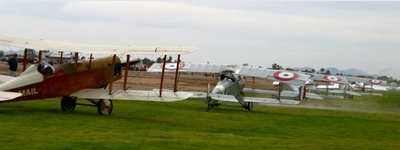
The FAA has issued a Special Airworthiness Information Bulletin (SAIB) to alert operators and owners of de Havilland Models DH60, DH82, DH83, and other Moth series airplanes that utilize wooden structure of an airworthiness concern, specifically maintenance practices with respect to wood structure.

The Civil Aviation Authority of the United Kingdom had in the past issued an airworthiness directive (now cancelled) to impose specific modification and inspection requirements on the de Havilland Moth types with respect to wood structure.

Some of these airplanes are type certificated in the United States (some of the Tiger Moth types), but others of this type and other Moth types may be operated on an airworthiness certificate that is other than a standard airworthiness certificate.

The cancelled United Kingdom AD required inspections according to DHSL Technical News Sheet (TNS) CT (Moth) No. 32, Issue 3, dated 1 December 2008. Recently, the Civil Aviation Authority of the Commonwealth of Australia FAA has issued a proposed airworthiness directive applicable to DH 82 and 82A airplanes.
The Civil Aviation Authority of the Commonwealth of Australia has issued PAD/DH 82/18, applicable to all variants of the DH82 and DH82A (Tiger Moth).

The FAA indicates that maintenance practices with respect to wooden structures are comprehensively covered in FAA Advisory Circular AC 43.13-1B Change 1: Acceptable Methods, Techniques, and Practices – Aircraft Inspection. The requirements in the UK AD to assure the airframe is airworthy already exist in 14 CFR part 43. The suggested maintenance documents provide clarification for the specific structure and are to be used like the maintenance manual. The FAA recommends that owners and operators of the above named model airplanes utilize this AC, the Australian PAD information, and the information in TNS 32 when inspecting the wooden structure of these airplanes.

(Image from file)

FMI: SAIB

Advertisement

More News

Classic Aero-TV: Extra; the Airplane, the Man, and His Grand DeLand Plan

From 2023 (YouTube Edition): Germany’s Best by Way of Florida Established in 1980 by German aerobatic pilot Walter Extra as a means by which to design and develop his own air>[...]

ANN FAQ: Follow Us On Instagram!

Get The Latest in Aviation News NOW on Instagram Are you on Instagram yet? It's been around for a few years, quietly picking up traction mostly thanks to everybody's new obsession >[...]

Aero-News: Quote of the Day (11.27.25)

“Achieving PMA for the S-1200 Series magnetos is another step in expanding our commitment to providing the aviation community with the most trusted and durable ‘firewal>[...]

ANN's Daily Aero-Term (11.27.25): Ultralight Vehicle

Ultralight Vehicle A single-occupant aeronautical vehicle operated for sport or recreational purposes which does not require FAA registration, an airworthiness certificate, or pilo>[...]

ANN's Daily Aero-Linx (11.27.25)

Aero Linx: The de Havilland Moth Club Ltd The de Havilland Moth Club evolved from a belief that an association of owners and operators of Moth aeroplanes should be formed to create>[...]

blog comments powered by Disqus



Advertisement

Advertisement

Podcasts

Advertisement

© 2007 - 2025 Web Development & Design by Pauli Systems, LC

