
Report: What First Responders Need To Know About UAVs | Aero-News Network
Aero-News Network
RSS icon RSS feed
podcast icon MP3 podcast
Subscribe Aero-News e-mail Newsletter Subscribe

Airborne Unlimited -- Most Recent Daily Episodes

Episode Date

Airborne-Monday

Airborne-Tuesday

Airborne-Wednesday Airborne-Thursday

Airborne-Friday

Airborne On YouTube

Airborne-Unlimited-11.24.25

AirborneNextGen-
11.18.25

Airborne-Unlimited-11.19.25

Airborne-AffordableFlyers-11.20.25

AirborneUnlimited-11.21.25

LIVE MOSAIC Town Hall (Archived): www.airborne-live.net

Mon, Mar 27, 2017

Report: What First Responders Need To Know About UAVs

ASDReports Releases Buyers' Guide For That Segment Of The Industry

To date, civilian First Responders fly weak and ineffectual UAVs exactly like the hobbyists who fly the same hardware. That’s helpful in a limited way but is a dead end for serious capabilities such as autonomous operations, over-the-horizon control and useful endurance.

Furthermore, the Border Patrol flies its Predator UAVs exactly like the military does, which is better than the hobbyists but also a dead end. First Responders can’t waste personnel money on the huge crews required to operate military drones. And such UAVs are not at all responsive to emergency calls in the first place.

In both cases, First Responders mistakenly believe UAV sellers who say: “Fly our stuff our way. We know what you need.” The question is: Since when do hobbyists and the military know what cops, rescue and firefighters need? Would the military consider flying UAVs that First Responders develop for their needs? No!

What First Responders need are UAVs that can operate without requiring human operators on scene. That should be obvious from the staffing constraints, risk of injury to operators standing next to police officers and the interference of too many people crowding a scene. But, most currently available UAVs for First Responders do not offer truly autonomous capabilities. Vendors naturally avoid discussing that fundamental issue.

First Responders need to understand the difference between what their currently available UAVs deliver and what they could have for the same money – and less. MiG answered these questions, plus other essential issues that are crucial to the success of UAVs in First Responder missions, such as the need for a well defined Operating Concept.

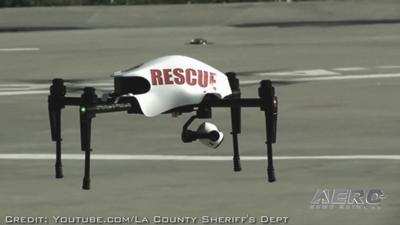
(Source: ASDReports news release. Image from file)

FMI: www.asdreports.com/market-research-report-214030/

Advertisement

More News

Classic Aero-TV: Extra; the Airplane, the Man, and His Grand DeLand Plan

From 2023 (YouTube Edition): Germany’s Best by Way of Florida Established in 1980 by German aerobatic pilot Walter Extra as a means by which to design and develop his own air>[...]

ANN FAQ: Follow Us On Instagram!

Get The Latest in Aviation News NOW on Instagram Are you on Instagram yet? It's been around for a few years, quietly picking up traction mostly thanks to everybody's new obsession >[...]

Aero-News: Quote of the Day (11.27.25)

“Achieving PMA for the S-1200 Series magnetos is another step in expanding our commitment to providing the aviation community with the most trusted and durable ‘firewal>[...]

ANN's Daily Aero-Term (11.27.25): Ultralight Vehicle

Ultralight Vehicle A single-occupant aeronautical vehicle operated for sport or recreational purposes which does not require FAA registration, an airworthiness certificate, or pilo>[...]

ANN's Daily Aero-Linx (11.27.25)

Aero Linx: The de Havilland Moth Club Ltd The de Havilland Moth Club evolved from a belief that an association of owners and operators of Moth aeroplanes should be formed to create>[...]

blog comments powered by Disqus



Advertisement

Advertisement

Podcasts

Advertisement

© 2007 - 2025 Web Development & Design by Pauli Systems, LC

