
NASA To Demonstrate Sonic 'Thump' Compared To Standard Sonic Boom | Aero-News Network
Aero-News Network
RSS icon RSS feed
podcast icon MP3 podcast
Subscribe Aero-News e-mail Newsletter Subscribe

Airborne Unlimited -- Most Recent Daily Episodes

Episode Date

Airborne-Monday

Airborne-Tuesday

Airborne-Wednesday Airborne-Thursday

Airborne-Friday

Airborne On YouTube

Airborne-Unlimited-12.08.25

AirborneNextGen-
12.09.25

Airborne-Unlimited-12.10.25

Airborne-AffordableFlyers-12.11.25

AirborneUnlimited-12.12.25

AFE 2025 LIVE MOSAIC Town Hall (Archived): www.airborne-live.net

Mon, May 23, 2016

NASA To Demonstrate Sonic 'Thump' Compared To Standard Sonic Boom

Event To Take Place May 31 At Armstrong Flight Research Center

NASA is planning a comparative demonstration of the currently louder sonic boom to a quieter, more community-friendly sonic "thump", which NASA looks to achieve through an experimental aircraft for Quiet Supersonic Technology (QueSST).

The May 31 event beginning at 9:00 a.m. PDT will be held at NASA's Armstrong Flight Research Center in Edwards, California, where manned supersonic flight was first achieved in 1947.

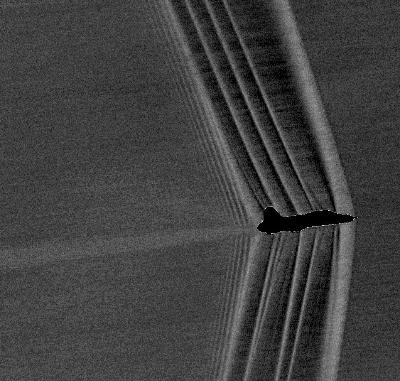
The event will feature supersonic flyovers by a NASA F/A-18 'Hornet' aircraft. The jet will produce a conventional, largely audible sonic boom, followed by another pass, in which it will perform a special dive maneuver, demonstrating a quieter "thump" in place of the boom. The quieter thump is closely similar to what NASA engineers believe supersonic flight may sound like through QueSST.

The disruptive sonic boom is the primary cause for the FAA's restriction on supersonic flight over land. NASA's efforts in QueSST may open the future to supersonic aviation on a commercial level.

In addition to the supersonic demonstration, NASA will feature presentations from Commercial Supersonic Technology program managers.

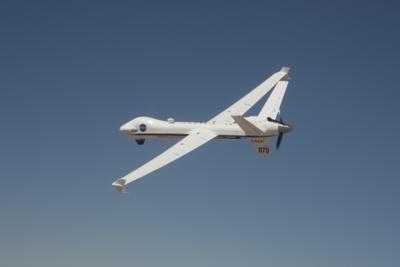
Following the supersonic portion of the event, NASA Armstrong will then showcase current efforts to safely integrate Unmanned Aircraft Systems into the National Airspace System (UAS-NAS).

(Images provided with NASA news release. Top: Shockwaves produced by a U.S. Air Force Test Pilot School T-38 aircraft in supersonic flight are captured by NASA researchers using a special filter and camera on the ground. Bottom: NASA's Ikhana is being used for the development of regulations to integrate Unmanned Aircraft Systems in the National Airspace System)

FMI: www.nasa.gov/centers/armstrong

Advertisement

More News

ANN's Daily Aero-Linx (12.12.25)

Aero Linx: Commercial Aviation Safety Team (CAST) Founded in 1997, the Commercial Aviation Safety Team (USCAST) has developed an integrated, data-driven strategy to reduce the comm>[...]

ANN's Daily Aero-Term (12.12.25): Land And Hold Short Operations

Land And Hold Short Operations Operations that include simultaneous takeoffs and landings and/or simultaneous landings when a landing aircraft is able and is instructed by the cont>[...]

ANN FAQ: How Do I Become A News Spy?

We're Everywhere... Thanks To You! Even with the vast resources and incredibly far-reaching scope of the Aero-News Network, every now and then a story that should be reported on sl>[...]

NTSB Final Report: Cirrus Design Corp SF50

Pilot’s Inadvertent Use Of The Landing Gear Control Handle Instead Of The Flaps Selector Switch During The Landing Rollout Analysis: The pilot reported that during the landin>[...]

Airborne 12.08.25: Samaritan’s Purse Hijack, FAA Med Relief, China Rocket Fail

Also: Cosmonaut Kicked Out, Airbus Scales Back, AF Silver Star, Russian A-60 Clobbered A Samaritan’s Purse humanitarian flight was hijacked on Tuesday, December 2, while atte>[...]

blog comments powered by Disqus



Advertisement

Advertisement

Podcasts

Advertisement

© 2007 - 2025 Web Development & Design by Pauli Systems, LC

