Wed, Sep 03, 2008
Pratt & Whitney Rocketdyne Says Tests Will Help
Constellation Development
Engineers from NASA and Pratt & Whitney Rocketdyne
successfully completed a series of hot-fire altitude tests using
liquid methane on the RS-18 engine. The tests, conducted at White
Sands test facility in New Mexico, are part of the technology
development for NASA's Constellation program, and gathered
important data on ignition, performance measurement, and rapid
start and stop.
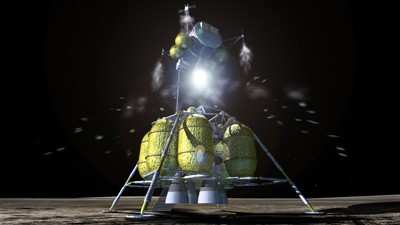
The RS-18 engine, which was last used to lift astronauts off the
moon's surface 36 years ago, was originally flown with storable
hypergolic propellants during the Apollo moon missions. It was
later modified to burn liquid oxygen and liquid methane, providing
increased safety and performance to future space vehicles.
"We're extremely proud to be part of this history-making
milestone," said Terry Lorier, RS-18 program manager, Pratt &
Whitney Rocketdyne. "It's tremendously gratifying to know our
engine technology is being tested for the NASA Constellation
Program. We literally pulled an engine off the museum shelf and
were the first to prove that liquid methane could be used on
hardware previously rated for storable propellants."
The cryogenic propellant-fueled RS-18 engine was modified under
NASA's Exploration Technology Development Program (ETDP), which
develops new technologies that will enable NASA to conduct future
human exploration missions while reducing mission risk and cost.
ETDP's Propulsion and Cryogenic Advanced Development Project, is
developing rocket engine and propulsion technologies for future
missions to the moon, Mars and beyond.
These propulsion systems would have higher performance than
current storable propellant systems and may have the potential to
use reactants mined from lunar and Martian environments.
The recent liquid methane tests on the RS-18 demonstrated
reliable ignition over a wide range of mixture ratios in vacuum
conditions; obtained performance data, chamber pressure data,
combustion efficiency and chemical kinetics effects, and combustion
stability data; demonstrated rapid engine start and shutdown; and
measured specific impulse.
More News
The Airplane Made An Uncommanded Right Yaw And Roll, And He Was Unable To Maintain Control Of The Airplane On November 11, 2025, about 1750 central standard time, a Cirrus SR20, N8>[...]
Aero Linx: Florida Antique Biplane Association "Biplanes.....outrageous fun since 1903." That quote really defines what the Florida Antique Biplane Association (FABA) is all about.>[...]
Wind Shear Escape An unplanned abortive maneuver initiated by the pilot in command (PIC) as a result of onboard cockpit systems. Wind shear escapes are characterized by maximum thr>[...]
“Working closely with the Polish Armed Forces, we’re focused on disciplined execution to help enhance Poland’s defense capabilities and keep up with the strong de>[...]
Also: Bell 505 on SAF, NYPA Gets Flak For BizAv 'Abuse', FAA Venezuela Caution, Horizon Update Textron Aviation has confirmed it will be ending production of the Beechcraft Bonanza>[...]



 NTSB Prelim: Cirrus Design Corp SR20


 See All