Mon, Oct 01, 2012
Entire Fleet Now Equipped With Advanced Radar Giving Aircraft New Capabilities
All field installations of a new radar system for the U.S. Air Force's fleet of B-2 stealth bombers have been completed by Northrop Grumman Corporation. Every operational B-2 is now equipped with the new radar, which was developed for the Air Force's B-2 Radar Modernization Program (RMP). It takes advantage of technology advancements that have occurred since the bomber was originally designed in the early 1980s.
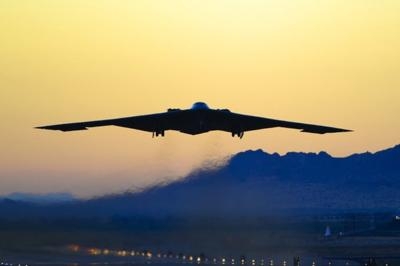
Northrop Grumman is the Air Force's prime contractor for the B-2, the flagship of the nation's long-range strike arsenal. The fleet of 20 B-2s is operated by the 509th Bomb Wing from its headquarters at Whiteman Air Force Base, MO.
"Every installation of RMP hardware performed at Whiteman was completed ahead of schedule – on average three days early," said Ron Naylor, director of B-2 modernization and transformation for Northrop Grumman. "We returned every one of those jets to the Air Force anywhere from one to 11 days early." The Whiteman RMP installs occurred in two blocks: five were completed during 2009 as part of the program's system development and demonstration phase. Ten more were completed between the third quarter of 2010 and the first quarter of 2012 as part of the RMP production contract.
"We worked actively with the Air Force to identify and purchase long-lead items that were part of our critical production path. That approach helped us ensure a seamless production process," he said.
Raytheon Space & Airborne Systems, El Segundo, CA, developed the new radar hardware under contract to Northrop Grumman. It includes an advanced electronically scanned array antenna, a power supply and a modified receiver/exciter.
The B-2 is the only long-range, large-payload U.S. aircraft that can penetrate deeply into access-denied airspace. In concert with the Air Force's air superiority fleet, which provides airspace control, and the Air Force's tanker fleet, which enables global mobility, the B-2 can help protect U.S. interests anywhere in the world. It can fly more than 6,000 nautical miles unrefueled and more than 10,000 nautical miles with just one aerial refueling, giving it the ability to reach any point on the globe within hours.
More News
From 2023 (YouTube Edition): Germany’s Best by Way of Florida Established in 1980 by German aerobatic pilot Walter Extra as a means by which to design and develop his own air>[...]
Get The Latest in Aviation News NOW on Instagram Are you on Instagram yet? It's been around for a few years, quietly picking up traction mostly thanks to everybody's new obsession >[...]
“Achieving PMA for the S-1200 Series magnetos is another step in expanding our commitment to providing the aviation community with the most trusted and durable ‘firewal>[...]
Ultralight Vehicle A single-occupant aeronautical vehicle operated for sport or recreational purposes which does not require FAA registration, an airworthiness certificate, or pilo>[...]
Aero Linx: The de Havilland Moth Club Ltd The de Havilland Moth Club evolved from a belief that an association of owners and operators of Moth aeroplanes should be formed to create>[...]



 Classic Aero-TV: Extra; the Airplane, the Man, and His Grand DeLand Plan


 See All