
HAI2009: L-3 IRIS Infrared Imaging System STC'd On Bell 206 And 407 | Aero-News Network
Aero-News Network
RSS icon RSS feed
podcast icon MP3 podcast
Subscribe Aero-News e-mail Newsletter Subscribe

Airborne Unlimited -- Most Recent Daily Episodes

Episode Date

Airborne-Monday

Airborne-Tuesday

Airborne-Wednesday Airborne-Thursday

Airborne-Friday

Airborne On YouTube

Airborne-SpecialEpisode-12.15.25

AirborneNextGen-
12.16.25

Airborne-Unlimited-12.10.25

Airborne-AffordableFlyers-12.11.25

AirborneUnlimited-12.12.25

AFE 2025 LIVE MOSAIC Town Hall (Archived): www.airborne-live.net

Sun, Feb 22, 2009

HAI2009: L-3 IRIS Infrared Imaging System STC'd On Bell 206 And 407

May Be Installed By Precise Flight On Popular Helis

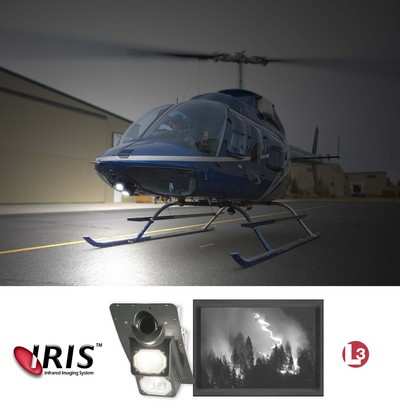
L-3 Avionics Systems announced Sunday at Heli-Expo 2008 the Federal Aviation Administration has granted Precise Flight Inc. a Supplemental Type Certification (STC) for the IRIS Infrared Imaging System on the Bell 206 and 407 helicopters.

"IRIS offers benefits that are a perfect match for the low-level, off-airport operations of rotory-wing aircraft," said Larry Riddle, vice president of business development for L-3 Avionics. "I'm confident that the combination of IRIS and HID lighting will provide a significant safety advantage for Bell 206 and 407 operators."

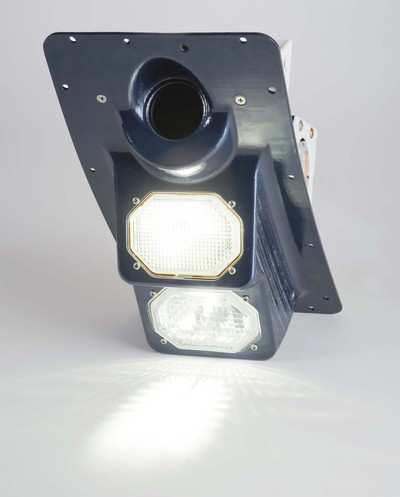
L 3 Avionics' IRIS camera will be housed inside a fairing on the nose of the aircraft with Precise Flight's high intensity discharge (HID) lighting kit for both helicopter models. The kit was certified in partnership with Leading Edge Aviation. The equipment is scheduled to become available in April 2009 and will be on display at Heli-Expo, booth 2526.

The IRIS Infrared Imaging System is a low-cost, enhanced vision system for fixed and rotory-wing aircraft that provides a clear view of obstacles ahead of the aircraft even at night or in hazy conditions. This provides an added layer of safety, especially when taxiing or landing. IRIS uses unique sensor technology to provide a high resolution infrared image with a high level of fidelity, and, unlike other infrared sensors, the L-3 sensor allows the system to provide a stable, continuous image regardless of abrupt maneuvers or turns into direct sunlight.

Precise Flight, which is the largest supplier of HID lighting for rotory-wing aircraft, designed the HID/IRIS kit to fit into the same space as the existing landing and hover lights while providing brighter and more efficient operation than incandescent lighting. HID bulbs are designed to last for the life of the aircraft and can be integrated with Precise Flight's patent-pending Pulselite® technology to improve aircraft visibility. 

FMI: www.l-3avionics.com

Advertisement

More News

Aero-News: Quote of the Day (12.18.25)

“These new aircraft strengthen our ability to respond quickly, train effectively and support communities nationwide. Textron Aviation has been a steadfast supporter in helpin>[...]

Classic Aero-TV: Viking Twin Otter 400--Bringing the DHC-6 Back Into Production

From 2011 (YouTube Edition): Rugged, Legendary, STOL Twin Makes A Comeback The de Havilland Twin Otter is an airplane with a long history, and it gained a reputation as a workhorse>[...]

NTSB Final Report: Rans Employee Flying Club Rans S-6ES Coyote II

A Wind Gust Lifted The Right Wing And The Airplane Turned To The Left Analysis: The pilot was departing from a 2,395-ft-long by 50-ft-wide turf runway. The pilot reported that afte>[...]

ANN FAQ: Submit a News Story!

Have A Story That NEEDS To Be Featured On Aero-News? Here’s How To Submit A Story To Our Team Some of the greatest new stories ANN has ever covered have been submitted by our>[...]

ANN's Daily Aero-Term (12.18.25): Braking Action Advisories

Braking Action Advisories When tower controllers receive runway braking action reports which include the terms “medium," “poor," or “nil," or whenever weather con>[...]

blog comments powered by Disqus



Advertisement

Advertisement

Podcasts

Advertisement

© 2007 - 2025 Web Development & Design by Pauli Systems, LC

