
U.S. Army Awards $47 Million To Develop Unmanned Autonomous Technologies | Aero-News Network
Aero-News Network
RSS icon RSS feed
podcast icon MP3 podcast
Subscribe Aero-News e-mail Newsletter Subscribe

Airborne Unlimited -- Most Recent Daily Episodes

Episode Date

Airborne-Monday

Airborne-Tuesday

Airborne-Wednesday Airborne-Thursday

Airborne-Friday

Airborne On YouTube

Airborne-SpecialEpisode-12.15.25

AirborneNextGen-
12.16.25

Airborne-Unlimited-12.10.25

Airborne-AffordableFlyers-12.11.25

AirborneUnlimited-12.12.25

AFE 2025 LIVE MOSAIC Town Hall (Archived): www.airborne-live.net

Mon, Aug 22, 2011

U.S. Army Awards $47 Million To Develop Unmanned Autonomous Technologies

Lockheed Martin, Kaman Aerospace To Collaborate On The Project

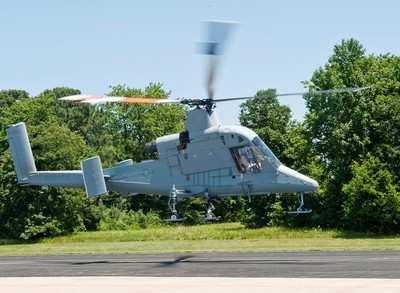
The U.S. Army has awarded a $47 million contract for the development, demonstration, and delivery of autonomous technologies for unmanned air systems in support of in-theater unmanned cargo resupply missions to Lockheed Martin. Under the contract, Lockheed Martin and Kaman Aerospace will demonstrate intelligent autonomous technologies for unmanned aerial systems using the K-MAX helicopter platform.

K-MAX File Photo

The Army's Aviation Applied Technology Directorate is investing in mature technologies that will enhance unmanned cargo resupply capabilities by improving autonomous operations, increasing delivery accuracy and reducing ground control station operator workload.  Prior to being deployed for cargo resupply missions, the technology will be demonstrated in an operationally realistic environment on the unmanned K-MAX.   

"Lockheed Martin's experience, resources and proven K-MAX platform will allow us to meet the Army's objectives," said Dan Spoor, vice president of Aviation Systems at Lockheed Martin Mission Systems & Sensors. "We are eager to develop and demonstrate the latest autonomous technologies using the mature and low-risk K-MAX platform."

The 6,000 lb power lifter can fly at a higher altitude with a heavier payload than any other rotary wing unmanned system. With its four-hook carousel, the unmanned K-MAX can also deliver more cargo to more locations in one flight.

Since partnering in 2007, Lockheed Martin and Kaman Aerospace have made significant investments to provide a rapid response to an urgent military service need. The team has met all milestones to date and recently began electromagnetic environmental effects testing at Naval Air Station Patuxent River, MD, as part of the Navy and Marine Corps Cargo Unmanned Air Systems program.

FMI: www.lockheedmartin.com/ms2, www.kaman.com

Advertisement

More News

Aero-News: Quote of the Day (12.18.25)

“These new aircraft strengthen our ability to respond quickly, train effectively and support communities nationwide. Textron Aviation has been a steadfast supporter in helpin>[...]

Classic Aero-TV: Viking Twin Otter 400--Bringing the DHC-6 Back Into Production

From 2011 (YouTube Edition): Rugged, Legendary, STOL Twin Makes A Comeback The de Havilland Twin Otter is an airplane with a long history, and it gained a reputation as a workhorse>[...]

NTSB Final Report: Rans Employee Flying Club Rans S-6ES Coyote II

A Wind Gust Lifted The Right Wing And The Airplane Turned To The Left Analysis: The pilot was departing from a 2,395-ft-long by 50-ft-wide turf runway. The pilot reported that afte>[...]

ANN FAQ: Submit a News Story!

Have A Story That NEEDS To Be Featured On Aero-News? Here’s How To Submit A Story To Our Team Some of the greatest new stories ANN has ever covered have been submitted by our>[...]

ANN's Daily Aero-Term (12.18.25): Braking Action Advisories

Braking Action Advisories When tower controllers receive runway braking action reports which include the terms “medium," “poor," or “nil," or whenever weather con>[...]

blog comments powered by Disqus



Advertisement

Advertisement

Podcasts

Advertisement

© 2007 - 2025 Web Development & Design by Pauli Systems, LC

