Largest Demand Expected In The Asia-Pacific Region
The "Renewable Aviation Fuel Market Outlook, Size, Share - Segmented by Pathways, Application, and Geography - Growth, Trends, and Forecast (2019 - 2024)" report has been added to ResearchAndMarkets.com.
In 2017, civil aviation, emitted around 859 million tons of CO2, accounting for around 2% of all human-induced CO2 emissions. To cut CO2 emissions by half by 2050 relative to 2005 levels and to achieve the goal of carbon-neutral growth from 2020, the industry will initiate the Carbon Offsetting and Reduction Scheme for International Aviation (CORSIA) in 2021.
The IATA (International Air Transport Association) has also set a goal of reaching 1 billion passengers on flights fuelled by sustainable aviation biofuels by 2025. To achieve this goal is expected to require policy support to increase aviation biofuels production and lower costs premiums over fossil jet kerosene.
Although sustainable and clean alternative technologies are in development, such as electric or solar-powered aircraft and the use of cryogenic hydrogen, these options are unlikely to be ready for use until the well after 2050.
At the international level, the ICAO in 2016, after years of debate and planning, ICAO has agreed on a new global market-based measure (GMBM), with a goal of implementing these measures by 2020. Such market-based mechanisms are expected to provide the basis to set a price on emissions, as the primary means for emission reduction at the regional and national levels.
GMBMs have been suggested as a way to bridge the time gap, by limiting carbon emissions while bio-jet fuels and other technologies are developed and hence driving the market in the long run.
The Renewable Energy Directive 2009/28/EC (RED) requires all EU Member States to ensure that by 2020 at least 10% of their transport energy consumption to be fulfilled from renewable sources by 2020. In 2015, it achieved 6.7%.
In other countries such as Indonesia, regulations on alternative fuels are currently designed to increase domestic consumption of biodiesel produced from palm oil. It began developing its biofuels industry in 2006, and since then, several regulations supporting biofuel have been introduced and evolved. Indonesian biofuel mandate is one of the most aggressive in the world.
Air travel has become more accessible than ever. In 2017 airfares, in real terms, averaged less than half what they were in 1995. In 2017, around 4.1 billion people traveled by aircraft, the highest till now. This has resulted in a significant increase in demand for aviation fuel and emissions in the past few years.
In response, the commercial sector has started to witness a gradual shift from the use of conventional aviation fuel to renewable fuel. More than 100,000 commercial flights have already successfully flown on biofuels blends, and several major airlines have committed to long-term biofuel purchase agreement. The IATA (International Air Transport Association) expects around 3.8 billion new passengers to travel by 2036, almost double compared to 2017.
The biggest driver for the demand is expected to be Asia-Pacific, accounting for almost more than half of the new passengers over the next two decades. This is expected to drive the demand for more aircraft and hence aviation fuel. As the industry is planning to shift to a renewable source of fuel to power its engine, biofuel has a huge opportunity in helping the aviation industry to meet the emission reduction target.
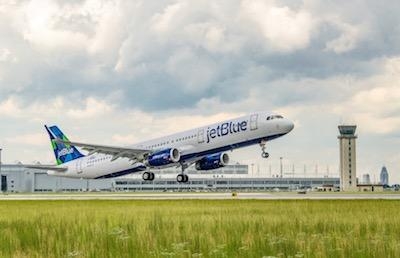
(Source: ResearchAndMarkets news release. Image from file)



 ANN's Daily Aero-Term (12.04.25): Cooperative Surveillance


 See All