This is Ourselves … Under Pressure
Sierra Nevada Corporation, colloquially, Sierra Space, is a privately held, American aerospace and national security contractor specializing in aircraft modification and integration, space components and systems, and related technology products for cybersecurity and health. The company is headquartered in Sparks, Nevada, and contracts with the United States Armed Forces, NASA, and private spaceflight companies.
On 23 March 2023, Sierra Space announced development of its softgoods inflatable technology LIFE habitat (Large Integrated Flexible Environment) continues apace. The LIFE habitat—a three-story commercial habitation, science, and bio-pharma platform designed to allow humans to live and work comfortably in low-Earth orbit and beyond—passed an evolutionary milestone that affirms Sierra Space’s position as the undisputed leader in inflatable space habitats and the world’s sole designer and producer of human-rated space structures.
In February, Sierra Space performed a month-long Accelerated Systematic Creep (ASC) test on the LIFE habitat design. Over the course of the protracted testing procedure, engineers subjected a one-third-scale iteration of the inflatable habitat to a sustained amount of pressure—until it failed. The test achieved its goal, as prescribed by NASA’s guidelines for the certification of inflatable softgoods, of generating an additional data point—pressure and time to burst—which can be used to estimate the life of a primary pressure-vessel.
Sierra Space Chief Engineer for LIFE, Shawn Buckley stated: “Our testing campaign has demonstrated that our LIFE habitat pressure shell design has a predicted life of far greater than sixty-years—or 525,600 hours—based on Sierra Space’s 15-year on-orbit life requirement and the applied 4x safety factor. We are obviously simulating pressures well in excess of the norm. Test after test, we continue to exceed our program requirements, validating that LIFE’s design, manufacturing, and assembly methods are consistent and repeatable.”
Sierra Space announced, also, that it had signed a new Space Act Agreement expanding its partnership with NASA’s Marshall Space Flight Center (MSFC).
Subject agreement supports ongoing design and development of LIFE test articles, and will see a full-scale engineering mockup—the size of a three-story apartment building—moved from NASA’s Kennedy Space Center in Florida to the agency’s Marshall Space Flight Center in Huntsville, Alabama. The Yellowhammer State is the seventh U.S. location in which Sierra Space operates facilities, joining Colorado, Florida, North Carolina, Texas, Wisconsin, and Washington, D.C.
Experts from Sierra Space, NASA, and ILC Dover—a Newark, Delaware-based engineering, development, and manufacturing firm specializing in the use of high-performance flexible materials for the aerospace, personal protection, and pharmaceutical industries—performed the recent ASC test inside a specially-built, climate-controlled building at MSFC, adjacent the flame trench of the Saturn 1/1B test stand—where NASA tested the mighty rockets by which the Apollo missions were thrust moonward. The location is optimal for both the performance and observation of the destructive testing of inflatable softgoods structures.
Sierra Space CEO Tom Vice remarked: “NASA’s Marshall Space Flight Center has a rich history in leading highly-complex testing for innovative systems and technologies. Under this new Space Act Agreement, we’re expanding our collaboration activities with Marshall, where we will be able to tap into that wealth of expertise, talent, and facility capabilities at a much deeper level.”
The next series of one-third-scale LIFE certification tests will focus on inserting hard structures into the habitat’s pressure shell and correlating the results to previous tests. Sierra Space anticipates moving toward full-scale testing of the LIFE system later this year.
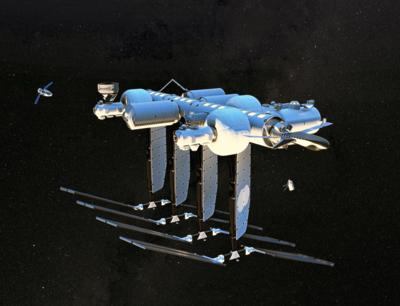
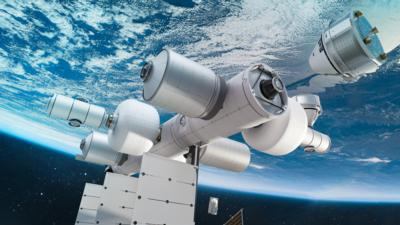
When completed and deployed, Sierra Space’s LIFE habitat will serve as both the habitation and payload element of the planned Orbital Reef commercial space station, a near-future collaboration between Sierra Space and Blue Origin.



 Aero-News: Quote of the Day (12.18.25)


 See All