Sun, Feb 28, 2016
Elbit Systems’ Enhanced Flight Vision System for Helicopters In Final Stages Of Development For Commercial Aviation
Elbit Systems recently performed several flight tests with the Helicopter Enhanced Flight Vision System (EFVS), HeliEVS in its operational configuration, combining the EVS sensor, HUD and fused image display processor.
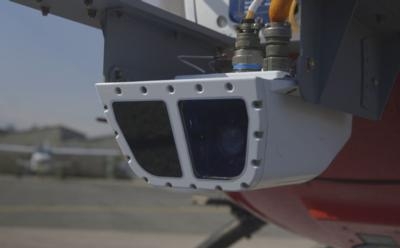
The operational configuration flight tests were performed onboard a BO105 testbed helicopter, testing the system during different hours of the day, in various locations including a variety of maneuvers such as rooftop landings and oil rig approaches above the sea, in order to evaluate real operational flight conditions during SAR, EMS and rig transportation missions.
Flights results indicate significant contribution to situational awareness and safety. Pilots indicated that they could recognize, even at night and from long distances, obstacles and landing point around the oil rig from far away and to be able to plan ahead optimal approaches.
All flight information and video image were conformably displayed in front of the pilot eyes on the Skylens / Skyvis wearable HUD systems.
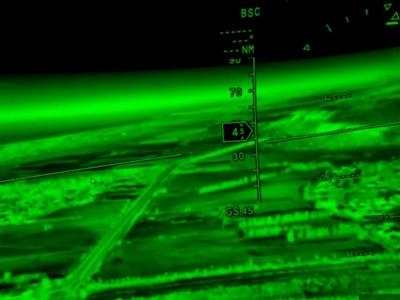
HeliEVS is based on the ClearVision EVS for fix wing applications. The system is packaged in a single Line Replaceable Unit (LRU), which autonomously performs the complete Enhanced Vision System capability. HeliEVS uses multi-spectral sensors to capture and display of terrain in darkness and reduced visibility. The sensors are combined and fused on the head-up display, with global terrain database (Synthetic Vision System – SVS), functioning as a Combined Vision System (CVS). The CVS provides a high fidelity view of the outside world even when actual visibility is zero. As such, CVS is providing the pilot effective situational awareness even in total darkness, fog or dense haze.
The Helicopter ClearVision solution integrates electronic vision sensors and head-up display technology, enabling continuous and unobstructed flying in ‘head up’ orientation, improves flight safety and situational awareness, increases mission success rates and minimizes the dependency on airport and helipad instruments. The system will also contribute to the reduction of landing minima in the future.
(Images provided with Elbit Systems news release)
More News
Its Offerings Are Lighter, Cleaner, and Now Pushing Past 1,000nm on SAF Jet Fuel DeltaHawk’s diesel-powered aircraft lineup has seen incredible upgrades over the last few yea>[...]
The Airplane Experienced A Total Loss Of Engine Power On December 3, 2025, about 1600 central standard time, a Mooney Aircraft Corp. M20K, N57229, was substantially damaged when it>[...]
Make Sure You NEVER Miss A New Story From Aero-News Network Do you ever feel like you never see posts from a certain person or page on Facebook or Instagram? Here’s how you c>[...]
Aero Linx: European Society of Aerospace Medicine (ESAM) As a pan-European, independent forum, it works to promote the safety and health of all persons involved in aviation and spa>[...]
“We are excited to see Wisk achieve this milestone, and I’m so proud of the team that made it possible. The team at Wisk has built advanced technologies across flight c>[...]



 Aero-TV: DeltaHawks Diesel Power Steps Into the Spotlight


 See All