
FAA Develops New Tower Siting Procedures | Aero-News Network
Aero-News Network
RSS icon RSS feed
podcast icon MP3 podcast
Subscribe Aero-News e-mail Newsletter Subscribe

Airborne Unlimited -- Most Recent Daily Episodes

Episode Date

Airborne-Monday

Airborne-Tuesday

Airborne-Wednesday Airborne-Thursday

Airborne-Friday

Airborne On YouTube

Airborne-Unlimited-12.08.25

AirborneNextGen-
12.09.25

Airborne-Unlimited-12.10.25

Airborne-AffordableFlyers-12.11.25

AirborneUnlimited-12.12.25

AFE 2025 LIVE MOSAIC Town Hall (Archived): www.airborne-live.net

Sun, Aug 14, 2005

FAA Develops New Tower Siting Procedures

Move Expected To Enhance Safety, Reduce Costs

By ANN Correspondent Rob Finfrock

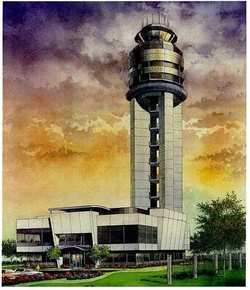
"Human factors" are now included in the criteria that the FAA will utilize when determining the placement and height of new air traffic control towers across the country – and the move might save some money, too.

Through a new program that measures air traffic controller visual perspective information, visual performance capability information from the Department of Defense, as well as limits imposed by terminal instrument procedures to determine appropriate airport traffic control tower heights, the FAA has revised its procedure for selecting and designing sites for future towers. 

The FAA expects to see dramatic benefits from their investment of about $150,000 in research into tower siting criteria, including enhanced safety. The recommendations from that research are expected to save the agency an estimated $5 million per year in new tower construction costs, by identifying the optimum height for ATC towers and reducing "overbuilding" costs.

"This achievement in air traffic control siting technology has tremendous immediate and long term implications for both the domestic and international aviation communities," said Charlie Keegan, Vice President for Operations Planning Services of the FAA's Air Traffic Organization. "It will enable tower planners to find and resolve potential problems before tower construction begins. The technology will enhance safety and efficiency, and will save the FAA millions of dollars in tower construction costs in years to come."

Every year, the FAA builds an average of seven new air traffic control towers around the country. Each new tower costs millions of dollars to construct at an average price of $40,000 per foot of height. To ensure that new towers enhance airport and air traffic safety while still being cost effective, FAA human factors and tower simulation specialists researched ways to improve tower siting (height and location) procedures.

FAA human factors specialists from headquarters, Great Lakes Region system analysts and tower simulation specialists at the William J. Hughes Technical Center near Atlantic City, along with specialists from the Army Research Laboratory in Adelphi, Md., developed a methodology to measure the improvement in controller visibility that can be gained by modifying planned tower height at different locations on the airport surface.

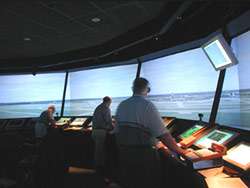
The Technical Center's Airport Facilities Tower Integration Laboratory features a unique tower simulation system that can create a 360-degree airport view for any city to evaluate potential tower sites; and determine if clear and unobstructed views of the airport surfaces and approach paths are visible from the various tower control positions. Specialists also have used the system to create realistic simulations of airport traffic control tower environments to address other siting concerns.

FMI: www.faa.gov

Advertisement

More News

Aero-News: Quote of the Day (12.11.25)

"The owners envisioned something modern and distinctive, yet deeply meaningful. We collaborated closely to refine the flag design so it complemented the aircraft’s contours w>[...]

ANN's Daily Aero-Term (12.11.25): Nonradar Arrival

Nonradar Arrival An aircraft arriving at an airport without radar service or at an airport served by a radar facility and radar contact has not been established or has been termina>[...]

Classic Aero-TV: David Uhl and the Lofty Art of Aircraft Portraiture

From 2022 (YouTube Edition): Still Life with Verve David Uhl was born into a family of engineers and artists—a backdrop conducive to his gleaning a keen appreciation for the >[...]

Airborne-NextGen 12.09.25: Amazon Crash, China Rocket Accident, UAV Black Hawk

Also: Electra Goes Military, Miami Air Taxi, Hypersonics Lab, MagniX HeliStrom Amazon’s Prime Air drones are back in the spotlight after one of its newest MK30 delivery drone>[...]

Airborne 12.05.25: Thunderbird Ejects, Lost Air india 737, Dynon Update

Also: Trailblazing Aviator Betty Stewart, Wind Farm Scrutiny, Chatham Ban Overturned, Airbus Shares Dive A Thunderbird pilot, ID'ed alternately as Thunderbird 5 or Thunderbird 6, (>[...]

blog comments powered by Disqus



Advertisement

Advertisement

Podcasts

Advertisement

© 2007 - 2025 Web Development & Design by Pauli Systems, LC

