
December Marks 50th Anniversary Of SR-71 First Flight | Aero-News Network
Aero-News Network
RSS icon RSS feed
podcast icon MP3 podcast
Subscribe Aero-News e-mail Newsletter Subscribe

Airborne Unlimited -- Most Recent Daily Episodes

Episode Date

Airborne-Monday

Airborne-Tuesday

Airborne-Wednesday Airborne-Thursday

Airborne-Friday

Airborne On YouTube

Airborne-Unlimited-12.22.25

AirborneNextGen-
12.23.25

Airborne-Unlimited-12.10.25

Airborne-FltTraining-12.18.25

AirborneUnlimited-12.19.25

AFE 2025 LIVE MOSAIC Town Hall (Archived): www.airborne-live.net

Wed, Dec 24, 2014

December Marks 50th Anniversary Of SR-71 First Flight

Airplane Retired In 1999 Still Holds Many Speed, Altitude Records

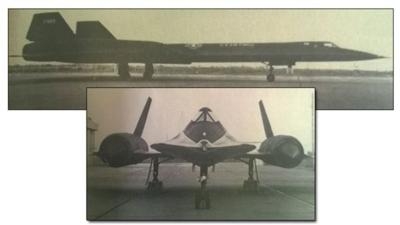
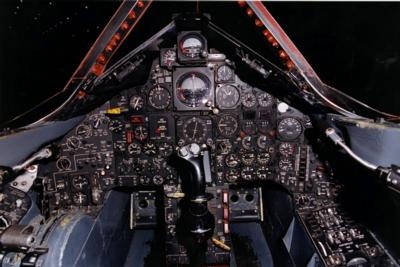
On Dec. 22, 1964 – one of the most remarkable aircraft in history made its first flight, the SR-71 Blackbird. Throughout its career the SR-71 was the fastest, highest-flying aircraft in the world. In its more than 3,500 strategic reconnaissance missions it routinely flew at Mach-3 and cruised above 85,000 feet. Despite being retired finally in 1999 the SR-71 still holds many official speed and altitude records.

Lockheed's famous Skunk Works came up with the SR-71 after pilot Francis Gary Powers' U-2 was shot down by a Soviet surface-to-air missile in May, 1960. The idea was to create a plane that could immediately escape from missiles, flying faster than a rifle bullet. At its heart would be twin Pratt & Whitney J58s, perhaps the most technically challenging engine Pratt & Whitney has ever built

At the Mach 3-plus cruising speed the engine operated at incredibly high temperatures. Almost no material used in conventional engines would work in the J58. Pratt & Whitney engineers had to come up with new alloys for turbine blades, new ways to forge and heat treat disks, and new manufacturing processes to roll superalloy sheets into engine cases. The engine even needed a new Pratt & Whitney eagle logo made out of stainless steel. The ceramic material used on the standard engine badge cracked and flaked when exposed to J58 temperatures.

A new kind of dual-cycle engine was created because at Mach-3 or better there were serious air flow problems. The J58 would operate like a turbo jet up to about Mach-3, all the air would flow through the engine core. Above that, a "bleed bypass cycle" takes some of the compressor air around the rear stages and is then reintroduced for afterburning. This boosts thrust significantly with no significant increase in fuel burn.

An interesting note, the original starter for the J58 was a ground cart equipped with two Buick Wildcat V8 engines.

(Images from file)

FMI: www.nationalmuseum.af.mil/factsheets/factsheet.asp?id=395

Advertisement

More News

Classic Aero-TV: In Praise of Alabama’s Patriot Aircraft USA

From 2023 (YouTube Edition): "Ain’t Your Daddy’s Super Cub”—Don Wade Co-owned by Don and Ron Wade—the former of Don’s Dream Machines, a storied >[...]

NTSB Final Report: Cirrus Design Corp SR22

Pilot-Rated Passenger Reported That The Pilot Did Not Adequately “Round Out” The Landing Flare And The Airplane Bounced And Yawed To The Right Analysis: The pilot state>[...]

ANN's Daily Aero-Term (12.21.25): Dead Reckoning

Dead Reckoning Dead reckoning, as applied to flying, is the navigation of an airplane solely by means of computations based on airspeed, course, heading, wind direction, and speed,>[...]

ANN's Daily Aero-Linx (12.21.25)

Aero Linx: Lake Amphibian Club This website is created and sponsored by the Lake Amphibian Club, to help spread the word about these wonderful, versatile amphibians that can land j>[...]

Aero-News: Quote of the Day (12.21.25)

“I am deeply honored to be sworn in as NASA administrator. NASA’s mission is as imperative and urgent as ever — to push the boundaries of human exploration, ignit>[...]

blog comments powered by Disqus



Advertisement

Advertisement

Podcasts

Advertisement

© 2007 - 2025 Web Development & Design by Pauli Systems, LC

