Plans Include Fixed-Price Contract And Internal Analysis Of
Productions Costs
The Defense Department will require a shift to a fixed-price
contract in its negotiations with Lockheed Martin for the initial
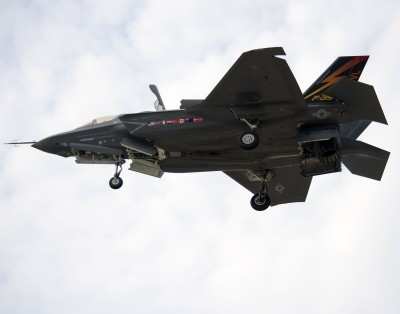
production phase of the F-35 Lightning II joint strike fighter, a
defense official said Friday in a briefing at the Pentagon.
The department also will conduct an internal analysis of what
the full production cost should be to better negotiate with the
contractor, said Ashton B. Carter, undersecretary of defense for
acquisition, technology, and logistics.
Taken together, Carter said, these measures will reduce costs of
a program that has met with significant production delays and cost
overruns since its inception in October 2001. "It did not seem
reasonable that the taxpayer should bear the entire cost of this
failure of the program to meet expectations," Carter said.
The joint strike fighter-- the most expensive acquisition in
U.S. military history -- will replace a wide range of aging fighter
and strike aircraft for the Air Force, Navy, Marine Corps and eight
international partners. The F-35 is the "heart of the future of our
tactical combat aviation," Defense Secretary Robert M. Gates said
in a visit to a Lockheed factory in August. "The importance of this
aircraft cannot be overstated."
The U.S. military ordered a total of 2,443 jets, with an
additional 730 purchased by the eight other countries. Initially
projected to cost around $50 million per aircraft, the current
estimate is about $80 million to $95 million each, in
inflation-adjusted dollars.
These two new initiatives come on top of Gates' announcement
last month that he was withholding $614 million in performance fees
from the contractor due to the program's setbacks.
With the announcements, the department is moving away from a
cost-plus arrangement, which reimburses companies for their
expenses in addition to providing an extra payment to guarantee
them a profit. Instead, in switching to a fixed-price structure,
the department and the contractor will set the price beforehand,
and the final payment will not depend on the total amount of time
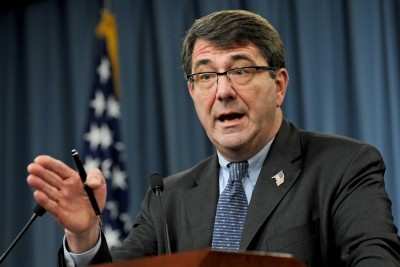
or resources expended to complete the project. "[The secretary]
directed that in order to ensure discipline in the transition from
development to production," Carter (pictured) said.
The director of defense procurement and acquisition policy will
conduct the "should-cost" analysis for the final production rollout
of the F-35 aircraft. Carter stressed that it's important for the
department to have its own estimate of what the program's cost
should be to better determine a negotiated price, rather than
relying solely on the contractor's figures. "We will be looking at
the cost structure of [the joint strike fighter] in all its
aspects; assembly, parts supplies, staffing, overheads and indirect
costs, cash flows, contract structures, fees, and lifecycle costs,"
Carter said in a prepared statement before the Senate Armed
Services committee yesterday.
Taking immediate steps to save costs is particularly necessary,
not only to benefit the taxpayer, but also because the program is
in jeopardy of crossing the Nunn-McCurdy threshold, a law that
requires that Congress be notified of a cost growth of more than 15
percent in a program. Nunn-McCurdy also calls for cancellation of
programs for which total cost grew by more than 25 percent over the
original estimate.
Rather than wait for the program to cross the Nunn-McCurdy line,
the defense officials began to review and restructure it as though
it was already in Nunn-McCurdy breach, Carter explained.
Carter said he understands that these new initiatives will not
be easy for Lockheed and its subcontractors to accommodate, but he
underscored that these decisions are crucial to moving the program
forward in a way that is acceptable to the military and the
American public.
"The emphasis must be on restoring a key aspect of this airplane
when the JSF program was first launched: affordability," he told
Congress.



 ANN's Daily Aero-Term (12.13.25): Light Gun


 See All