
Hybrid Electric Retrofits Will Lead the Way In Decarbonizing Aviation | Aero-News Network
Aero-News Network
RSS icon RSS feed
podcast icon MP3 podcast
Subscribe Aero-News e-mail Newsletter Subscribe

Airborne Unlimited -- Most Recent Daily Episodes

Episode Date

Airborne-Monday

Airborne-Tuesday

Airborne-Wednesday Airborne-Thursday

Airborne-Friday

Airborne On YouTube

Airborne-SpecialEpisode-12.15.25

AirborneNextGen-
12.16.25

Airborne-Unlimited-12.10.25

Airborne-AffordableFlyers-12.11.25

AirborneUnlimited-12.12.25

AFE 2025 LIVE MOSAIC Town Hall (Archived): www.airborne-live.net

Mon, Jul 22, 2019

Hybrid Electric Retrofits Will Lead the Way In Decarbonizing Aviation

Ampaire CEO Discusses Roadmap To An All-Electric Future

In remarks ahead of the EAA AirVenture airshow this month, Ampaire CEO Kevin Noertker revealed the company’s roadmap toward new all-electric commuter aircraft, beginning with the rapid introduction of electric powertrains on currently certified aircraft. This approach addresses two major problems in commercial aviation today—high operating costs and the environmental impact of CO2 and other emissions.

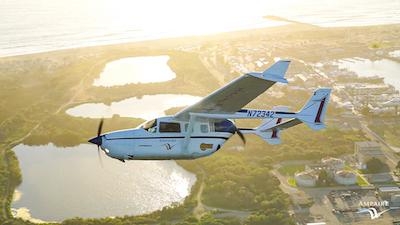
Ampaire has begun a flight test program on its first commercial product, the Ampaire Electric EEL, a twin-engine Cessna 337 Skymaster modified to fly with one conventional combustion engine and one electric motor. It is the largest hybrid-electric aircraft flying today. The Electric EEL will enter flight trials on commercial routes with Mokulele Airlines in Hawaii later this year, a partnership enabled by a Hawaii-based startup accelerator, Elemental Excelerator. FAA certification of the Electric EEL is projected for 2021.

“The most practical way to achieve an all-electric future is to jump start the market with a partially-electric present,” said Noertker. “We’re pursuing a pragmatic, step-by-step approach, a scalable plan to quickly commercialize and expand the electric airplane market. This approach recognizes that other development programs for clean-sheet all-electric aircraft will consume hundreds of millions of dollars in R&D and potentially require a decade or more to certify.

“Such programs will be complicated by the rapid evolution and improvement of electric battery and powertrain technology, and the lack of experience of regulators in the area of electric aircraft.

“In contrast, Ampaire is currently demonstrating the ability to cut fuel consumption by 50 percent and reduce emissions accordingly. The development cost of modifying an existing aircraft is relatively low and manageable versus a clean-sheet design. Both Ampaire and the FAA have an opportunity to work together to develop a regulatory framework that promotes safety and creates a predictable, manageable path for certifying electric aircraft.

“The Cessna 337 modification is a first step. The next may be a hybrid or fully electric retrofit of a nine- to 19-passenger commuter/cargo aircraft. As batteries and powertrains mature, we will shift our focus to clean-sheet designs such as our nine-passenger, zero-emissions Tailwind concept.

“By that time, we will have established strong cash-flow from retrofit programs as well as engineering and certification expertise that will earn the confidence of investors, partners, aircraft operators, and regulators.”

Noertker pointed to UBS’s recent estimate of a $200 billion market for hybrid electric aircraft.  He will be meeting with the public and the media at Oshkosh in the EAA Urban Air Mobility Showcase and will discuss the emerging electric aviation market at 10 am July 24th at AirVenture’s Aviation Gateway Park and during other speaking opportunities at the show.

(Image provided with Ampaire news release)

FMI: www.ampaire.com

Advertisement

More News

Aero-News: Quote of the Day (12.18.25)

“These new aircraft strengthen our ability to respond quickly, train effectively and support communities nationwide. Textron Aviation has been a steadfast supporter in helpin>[...]

Classic Aero-TV: Viking Twin Otter 400--Bringing the DHC-6 Back Into Production

From 2011 (YouTube Edition): Rugged, Legendary, STOL Twin Makes A Comeback The de Havilland Twin Otter is an airplane with a long history, and it gained a reputation as a workhorse>[...]

NTSB Final Report: Rans Employee Flying Club Rans S-6ES Coyote II

A Wind Gust Lifted The Right Wing And The Airplane Turned To The Left Analysis: The pilot was departing from a 2,395-ft-long by 50-ft-wide turf runway. The pilot reported that afte>[...]

ANN FAQ: Submit a News Story!

Have A Story That NEEDS To Be Featured On Aero-News? Here’s How To Submit A Story To Our Team Some of the greatest new stories ANN has ever covered have been submitted by our>[...]

ANN's Daily Aero-Term (12.18.25): Braking Action Advisories

Braking Action Advisories When tower controllers receive runway braking action reports which include the terms “medium," “poor," or “nil," or whenever weather con>[...]

blog comments powered by Disqus



Advertisement

Advertisement

Podcasts

Advertisement

© 2007 - 2025 Web Development & Design by Pauli Systems, LC

