NASA, Partners Say ISS Gives Emergency Responders A 'Unique Vantage Point' In Triage Efforts
The International Space Station (ISS) partner agencies released a statement Wednesday on the benefits of the space station during natural disasters on Earth. Flying 250 miles above the planet and circling it every 90 minutes, the orbiting outpost provides a unique vantage point from which images of Earth can play an important role in helping emergency responders know what areas are most in need during natural disasters.
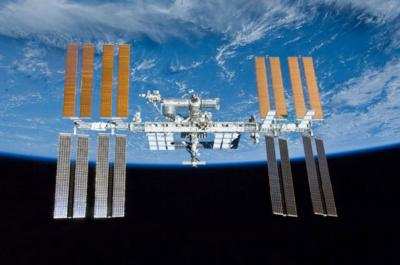
In the statement, the International Space Station Multilateral Coordination Board said ISS is an extraordinary global research facility on which the ISS Partnership is carrying out research at an unprecedented rate. Many of the activities on this unique platform yield valuable benefits to society.
Although each Space Station Partner has distinct agency goals for Station research, each Partner shares a unified goal to extend the resulting knowledge for the betterment of humanity. In 2012, the ISS Partnership published "International Space Station Benefits for Humanity," illustrating specific successful humanitarian accomplishments. This publication highlights ISS contributions in Earth observation and disaster response, education, and human health that are improving the lives of many throughout the world.
ISS Earth observation is one of the primary areas of focus for ISS research. A unique complement of automated and crew-operated Earth observation assets are on board the ISS. In addition, the orbit of the ISS provides a distinct perspective over Earth targets that augments polar-orbiting remote sensing spacecraft. As a result, the ISS can provide an immediate benefit to regions that have experienced natural disasters, such as floods, wildfires, large storm systems, earthquakes, tsunamis, and volcanic eruptions. The data provided from ISS is a complement to the data provided by Earth Observation satellites through the International Charter "Space and Major Disasters," of which several of the ISS Partners are members.
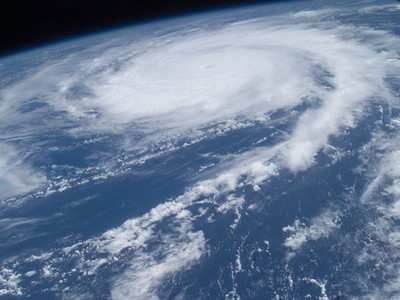
Through the ISS Program Science Forum's Earth Observation Working Group and under the leadership of the Japan Aerospace Exploration Agency and the National Aeronautics and Space Administration, ISS Earth Observation assets are supporting global response efforts for regions experiencing natural disasters by collecting imagery of disaster-stricken areas on a best-effort basis. In recent months, the ISS Partners have worked on procedures to efficiently contribute to disaster response with the image data taken by the ISS crew members and ISS Earth observation payloads. Recent imagery campaigns in response to calls for data include: crew Earth observations of areas flooded in southern Russia; imagery of areas in Haiti and the Atlantic coast of the United States that were impacted by hurricane Sandy; multispectral imagery collected by the ISS Agricultural Camera (ISSAC) of flooded regions in Nigeria and Pakistan.
Additional payloads supporting this effort include the Hyperspectral Imager for the Coastal Ocean (HICO), the Super Sensitive High Definition TV (SS-HDTV) camera, the Multipurpose Consolidated Experiment (MCE) high definition TV camera (KIBO HDTV-EF), and the ISS SERVIR Environmental Research and Visualization System (ISERV). New sensors will soon be available, expanding the Earth observation capabilities on the ISS and the contributions of data to regions affected by natural disasters.
The ISS Program will continue to contribute regional data collected by ISS sensors and crew members in response to natural disasters. The ISS Partners are committed to continuing to share this unique asset in space and the benefits it brings to life on Earth.
(Images provided by NASA)



 Aero-News: Quote of the Day (12.18.25)


 See All