
ATSB: Pilot Passed Out During Flight, Leaving Passenger As PIC | Aero-News Network
Aero-News Network
RSS icon RSS feed
podcast icon MP3 podcast
Subscribe Aero-News e-mail Newsletter Subscribe

Airborne Unlimited -- Most Recent Daily Episodes

Episode Date

Airborne-Monday

Airborne-Tuesday

Airborne-Wednesday Airborne-Thursday

Airborne-Friday

Airborne On YouTube

Airborne-Unlimited-12.22.25

AirborneNextGen-
12.23.25

Airborne-Unlimited-12.10.25

Airborne-FltTraining-12.18.25

AirborneUnlimited-12.19.25

AFE 2025 LIVE MOSAIC Town Hall (Archived): www.airborne-live.net

Wed, Dec 24, 2014

ATSB: Pilot Passed Out During Flight, Leaving Passenger As PIC

Reportedly Became Dehydrated And Lost Consciousness On Climbout

The pilot of a Piper Cherokee in Australia left his passenger in unexpected control of the airplane during a flight last January after passing out likely due to dehydration, the Australian Transport Safety Bureau said in a final report stemming from the incident.

According to the report, on January 25, 2014, at about 1300 Eastern (Australian) Daylight-savings Time, a Piper PA-28-180 aircraft, registered VH-PXB (PXB), taxied at Forbes aerodrome, New South Wales, for a private local flight with the pilot and one passenger on board.

The passenger of PXB reported that, about 10 minutes after take-off, the pilot appeared to suffer a seizure and lost consciousness. The passenger took control of the aircraft, turned the aircraft back towards Forbes aerodrome and used the radio to call for help.

The pilot of a Pawnee was back-tracking at Forbes, when he heard the passenger of PXB call for help on the CTAF.  He ascertained that the passenger was able to control the aircraft, but had not landed an aircraft previously. He assisted the passenger to conduct orbits to the north of the aerodrome and maintain about 2,000 ft AMSL.

After orbiting for about 22 minutes, the passenger advised that the pilot was conscious and had taken control of the aircraft to return to land. The pilot of the Pawnee became concerned as he observed PXB descending and heading south-west, away from the aerodrome. He communicated with the pilot and with the assistance of the passenger, PXB turned towards the aerodrome. A few minutes later, PXB landed just short of the threshold of runway 27, bounced once and veered off the runway during the landing roll.

The pilot of PXB did not recall any of the flight after the initial climb, until when the aircraft was lined up for a landing on runway 27. He reported feeling unwell prior to the flight and his doctor advised that dehydration was the most likely cause of his loss of consciousness.

This incident highlights the importance of pilots assessing their fitness to fly prior to every flight.

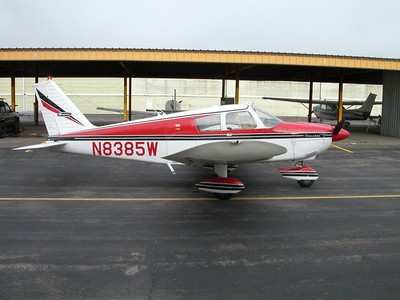
(Image from file. Not incident airplane)

FMI: ATSB Report

Advertisement

More News

Classic Aero-TV: In Praise of Alabama’s Patriot Aircraft USA

From 2023 (YouTube Edition): "Ain’t Your Daddy’s Super Cub”—Don Wade Co-owned by Don and Ron Wade—the former of Don’s Dream Machines, a storied >[...]

NTSB Final Report: Cirrus Design Corp SR22

Pilot-Rated Passenger Reported That The Pilot Did Not Adequately “Round Out” The Landing Flare And The Airplane Bounced And Yawed To The Right Analysis: The pilot state>[...]

ANN's Daily Aero-Term (12.21.25): Dead Reckoning

Dead Reckoning Dead reckoning, as applied to flying, is the navigation of an airplane solely by means of computations based on airspeed, course, heading, wind direction, and speed,>[...]

ANN's Daily Aero-Linx (12.21.25)

Aero Linx: Lake Amphibian Club This website is created and sponsored by the Lake Amphibian Club, to help spread the word about these wonderful, versatile amphibians that can land j>[...]

Aero-News: Quote of the Day (12.21.25)

“I am deeply honored to be sworn in as NASA administrator. NASA’s mission is as imperative and urgent as ever — to push the boundaries of human exploration, ignit>[...]

blog comments powered by Disqus



Advertisement

Advertisement

Podcasts

Advertisement

© 2007 - 2025 Web Development & Design by Pauli Systems, LC

