
Hood Tech Upgrades Flying Launch And Recovery System (FLARES 2.0) | Aero-News Network
Aero-News Network
RSS icon RSS feed
podcast icon MP3 podcast
Subscribe Aero-News e-mail Newsletter Subscribe

Airborne Unlimited -- Most Recent Daily Episodes

Episode Date

Airborne-Monday

Airborne-Tuesday

Airborne-Wednesday Airborne-Thursday

Airborne-Friday

Airborne On YouTube

Airborne-SpecialEpisode-12.15.25

AirborneNextGen-
12.16.25

Airborne-Unlimited-12.10.25

Airborne-AffordableFlyers-12.11.25

AirborneUnlimited-12.12.25

AFE 2025 LIVE MOSAIC Town Hall (Archived): www.airborne-live.net

Tue, Mar 26, 2019

Hood Tech Upgrades Flying Launch And Recovery System (FLARES 2.0)

Capacity Increase Includes All Existing ScanEagle/ScanEagle3 Variants

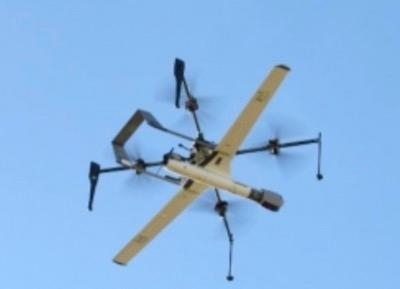
Originally sized with comfortable margin when handling a 25 kg (55 pound) ScanEagle, Hood Tech has recently extended the capacity of its Flying Launch and Recovery System (FLARES) to handle aircraft weighing up to 45kg (99 pounds). This capacity includes all existing ScanEagle/ScanEagle3 variants.

Further, modification to the hosted fixed-wing aircraft is no longer necessary; Hood Tech’s FLARES now sports “airframe grippers” capable of grabbing any of these existing aircraft. Recovery is executed by Skyhook, either with FLARES or with a traditional Skyhook.

“Winged unmanned aircraft are beginning to appear with awful strapped-on VTOL claptrap,” explains Hood Tech President and Skyhook co-inventor, Dr. Andy von Flotow. “FLARES enables VTOL operations while adding no hardware to the aircraft. When the aircraft must carry VTOL hardware throughout its mission, designers invariably skimp; the 'VTOL stuff' is then under-sized and not tough enough.”

Hood Tech’s FLARES achieves toughness with excess power: With nominal payload, FLARES hovers at 55% throttle. Excess hover power is available for climbing, for maneuvering against gusty winds, for high/hot operations and for redundancy. Redundancy is further enhanced by FLARES’ 8-motor/8-rotor design.

FLARES can be used to replace traditional launcher and Skyhook ground equipment. The combined weight for FLARES launch and recovery equipment is under 200kg (441 pounds). Alternatively, FLARES enables operation from deep clearings as small as a few tens of meters.

(Image provided with Hood Tech news release)

FMI: www.hoodtech.com

Advertisement

More News

ANN's Daily Aero-Term (12.19.25): Ultrahigh Frequency (UHF)

Ultrahigh Frequency (UHF) The frequency band between 300 and 3,000 MHz. The bank of radio frequencies used for military air/ground voice communications. In some instances this may >[...]

NTSB Prelim: Cirrus Design Corp SR22T

During The 7 Second Descent, There Was Another TAWS Alert At Which Time The Engine Remained At Full Power On October 24, 2025 at 2115 mountain daylight time, a Cirrus SR22T, N740TS>[...]

Classic Aero-TV: The Red Tail Project--Carrying the Torch of the Tuskegee Airmen

From 2009 (YouTube Edition): Educational Organization Aims to Inspire by Sharing Tuskegee Story Founding leader Don Hinz summarized the Red Tail Project’s mission in simple, >[...]

Aero-News: Quote of the Day (12.19.25)

“This feels like an important step since space travel for people with disabilities is still in its very early days... I’m so thankful and hope it inspires a change in m>[...]

Airborne 12.17.25: Skydiver Hooks Tail, Cooper Rotax Mount, NTSB v NDAA

Also: New Katanas, Kern County FD Training, IndiGo’s Botched Roster, MGen. Leavitt Named ERAU Dean The Australian Transportation Safety Bureau (ATSB) has wrapped up its inves>[...]

blog comments powered by Disqus



Advertisement

Advertisement

Podcasts

Advertisement

© 2007 - 2025 Web Development & Design by Pauli Systems, LC

