

FAA Finds Reasonable Solution To Cape Cod Summer Air Traffic Jam | Aero-News Network
Aero-News Network
RSS icon RSS feed
podcast icon MP3 podcast
Subscribe Aero-News e-mail Newsletter Subscribe

Airborne Unlimited -- Most Recent Daily Episodes

Episode Date

Airborne-Monday

Airborne-Tuesday

Airborne-Wednesday Airborne-Thursday

Airborne-Friday

Airborne On YouTube

Airborne-SpecialEpisode-12.15.25

AirborneNextGen-
12.16.25

Airborne-Unlimited-12.10.25

Airborne-AffordableFlyers-12.11.25

AirborneUnlimited-12.12.25

AFE 2025 LIVE MOSAIC Town Hall (Archived): www.airborne-live.net

Sun, May 18, 2003

FAA Finds Reasonable Solution To Cape Cod Summer Air Traffic Jam

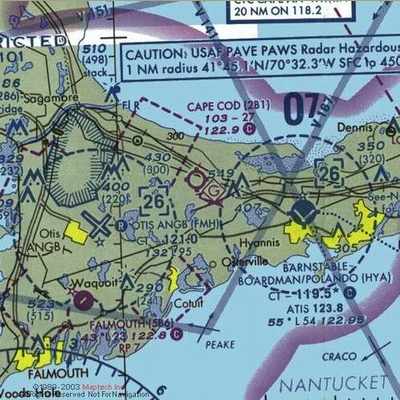
The FAA in New England is calling on pilots to help alleviate air traffic congestion in the vicinity of Cape Cod, Nantucket, and Martha's Vineyard. Rather than trying to turn Nantucket's Class D airspace into more restrictive Class C (a move AOPA fought hard against the last time it was proposed), FAA instead has instituted a more reasonable air traffic management plan for IFR traffic.

"AOPA is pleased to see the FAA looking for alternatives to traditional rulemaking to deal with seasonal traffic congestion around the cape and islands," said AOPA Manager of Air Traffic Heidi Williams. " The initiatives being considered provide for immediate relief using existing resources in a more practical approach, rather than establishing new Class C airspace."

The letter from Cape Tracon, the radar facility that covers that entire area, says, "The combination of IFR weather conditions and increases in the demand for air traffic services will sometimes cause a significant delay in your ability to obtain an IFR clearance to Nantucket (ACK), Martha's Vineyard (MVY) or Hyannis (HYA) Airports." It goes on to explain the traffic management plans it intends to use and warns that air-filed IFR clearances may not be possible during peak activity times.

Cape Tracon plans to use a special traffic management program (STMP) to issue slot reservations for IFR traffic during times when traffic volume is expected to exceed Nantucket's arrival capacity. AOPA attended a briefing hosted by the FAA to discuss concerns about the STMP and was assured that the program would be used as little as possible. However, notification that slot reservations will be required could go out as late as 1800 local the night before the STMP is to be implemented. AOPA advises pilots planning to fly to Nantucket to check them on morning of their flights to see if the slot reservation system has been activated.

FMI: www.faa.gov

Advertisement

More News

Aero-News: Quote of the Day (12.18.25)

“These new aircraft strengthen our ability to respond quickly, train effectively and support communities nationwide. Textron Aviation has been a steadfast supporter in helpin>[...]

Classic Aero-TV: Viking Twin Otter 400--Bringing the DHC-6 Back Into Production

From 2011 (YouTube Edition): Rugged, Legendary, STOL Twin Makes A Comeback The de Havilland Twin Otter is an airplane with a long history, and it gained a reputation as a workhorse>[...]

NTSB Final Report: Rans Employee Flying Club Rans S-6ES Coyote II

A Wind Gust Lifted The Right Wing And The Airplane Turned To The Left Analysis: The pilot was departing from a 2,395-ft-long by 50-ft-wide turf runway. The pilot reported that afte>[...]

ANN FAQ: Submit a News Story!

Have A Story That NEEDS To Be Featured On Aero-News? Here’s How To Submit A Story To Our Team Some of the greatest new stories ANN has ever covered have been submitted by our>[...]

ANN's Daily Aero-Term (12.18.25): Braking Action Advisories

Braking Action Advisories When tower controllers receive runway braking action reports which include the terms “medium," “poor," or “nil," or whenever weather con>[...]

blog comments powered by Disqus



Advertisement

Advertisement

Podcasts

Advertisement

© 2007 - 2025 Web Development & Design by Pauli Systems, LC

