Thu, Aug 11, 2022
Silence of the MELs
Belligerence against Ukraine has landed Russia in hot water with the international community—which swiftly levied sweeping sanctions against the superpower. In accordance with edicts handed down by their respective governments, American Boeing and European Airbus have halted sales of their aircraft, aircraft parts, and technical expertise to Russian air carriers. Desperate to keep their aircraft flying, Russian airlines have resorted to the age-old recourse of the desperate—cannibalism.
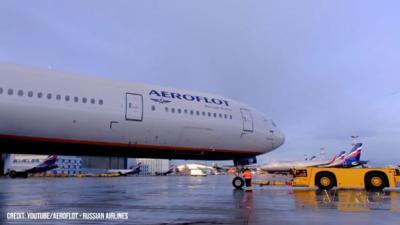
Cannibalism of aircraft usually occurs when the need for parts outpaces supply chains, and no alternative parts are available. As the airworthiness of commercial aircraft is predicated upon constant maintenance and component replacement, Russian airlines have had no choice but to remove aircraft from service and relegate them to the sad station of parts donors.
A leaked, unofficial report from within the Kremlin posits a dismal future for Russia’s aviation sector as the nation’s carrier’s attempt to replace Western airliners with Russian-made commercial aircraft. The cost of replacing Russia’s extant commercial fleet with one-thousand domestically produced airplanes by 2030 is estimated to cost 627-billion rubles—about $9.7-billion. Such a price tag is apt to prove too heavy a burden on Russian taxpayers—many of whom oppose their nation’s invasion of Ukraine.
In addition to cannibalism, Russian air carriers are endeavoring to source aircraft parts through Turkey, India, and China—countries alternately tacitly averse to the West or sympathetic to the Kremlin’s aims. China—likely fearing incurring Western sanctions of its own—has thus far reportedly turned down Russian airlines' requests for parts and technical support.
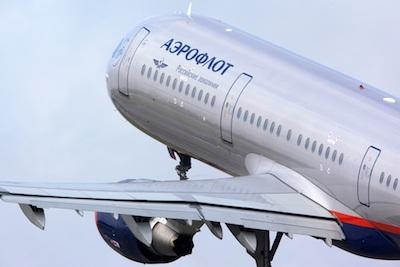
Owing to the increasingly dubious states of repair into which their fleets are falling, Russian airlines are currently prohibited from operating in the airspaces of most nations outside the Russian Federation. Critics of the West’s response to the Ukrainian conflict argue sanctions on Russia’s commercial aircraft industry are apt to harm primarily civilians forced to book travel aboard woefully underserviced aircraft.
Certainly, American and European resolve will be sternly tested when Aeroflot jets begin falling from Russian skies—as they inevitably will.
More News
“We respectfully call on the City of Mesa to: 1. Withdraw the landing fee proposal immediately 2. Engage with the aviation community before making decisions that impact safet>[...]
High Speed Taxiway A long radius taxiway designed and provided with lighting or marking to define the path of aircraft, traveling at high speed (up to 60 knots), from the runway ce>[...]
Aero Linx: International Federation of Airworthiness (IFA) IFA uniquely combines together all those with responsibility for policies, principles and practices concerned with the co>[...]
Controller’s Expectation That VW02 Would Have Departed Sooner Led To An Inadequate Scan And Loss Of Situational Awareness Analysis: A Robinson R-44 helicopter N744AF, VW02 (V>[...]
A Few Questions AND Answers To Help You Get MORE Out of ANN! 1) I forgot my password. How do I find it? 1) Easy... click here and give us your e-mail address--we'll send it to you >[...]



 Aero-News: Quote of the Day (12.09.25)


 See All