
U.S. Drones Hacked With $26 COTS Software | Aero-News Network
Aero-News Network
RSS icon RSS feed
podcast icon MP3 podcast
Subscribe Aero-News e-mail Newsletter Subscribe

Airborne Unlimited -- Most Recent Daily Episodes

Episode Date

Airborne-Monday

Airborne-Tuesday

Airborne-Wednesday Airborne-Thursday

Airborne-Friday

Airborne On YouTube

Airborne-Unlimited-12.08.25

AirborneNextGen-
12.09.25

Airborne-Unlimited-12.10.25

Airborne-AffordableFlyers-12.11.25

AirborneUnlimited-12.12.25

AFE 2025 LIVE MOSAIC Town Hall (Archived): www.airborne-live.net

Sat, Dec 19, 2009

U.S. Drones Hacked With $26 COTS Software

Insurgents Intercepted Video Feed From Aircraft

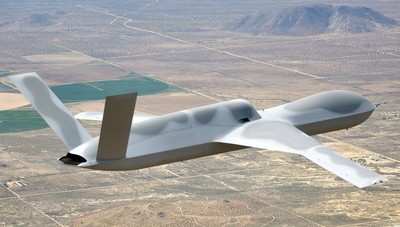
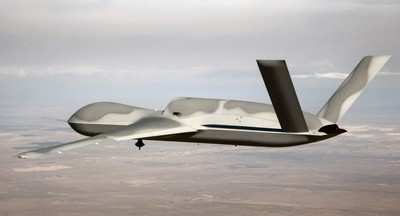
Insurgents using an inexpensive commercial off-the-shelf (COTS) software package have reportedly intercepted video feeds from U.S. military drones, potentially giving them information about military operations. The hack could allow the bad guys to evade coalition forces.

"The Wall Street Journal" reports that the program, called "Skygrabber", allowed insurgents, possibly with Iranian backing, to intercept the video from Predator UAVs being sent via an unencrypted link in remote areas of Iraq. An unnamed source with knowledge of the matter said the insurgents were not able to take control of the aircraft, or disrupt their flight, but that the hack could remove the element of surprise from some missions, and give insurgents information about which areas and roadways are being watched.

The problem was actually discovered in late 2008, when U.S. military forces captured a Shiite militant who had literally days worth of captured UAS video on his laptop computer. The discovery of additional video in July led U.S. officials to belive the militants were being funded by Iran.

The Pentagon has known about the potential vulnerability of the unencrypted links between UAVs and ground stations since the Bosnian campaign in the 1990's, but assumed that militants were unable to capture the information. One of the Russian designers of the software told the paper he created it to capture free music and video content online, and did not intend for it to have a military purpose.

Military officials say no U.S. service personnel have been injured or killed due to this security breech. Meanwhile, the Pentagon reportedly working towards encrypting all of its video feeds from Unmanned Aerial Systems, but it is not known whether the security hole has been closed.

FMI: www.dod.gov

Advertisement

More News

Aero-News: Quote of the Day (12.11.25)

"The owners envisioned something modern and distinctive, yet deeply meaningful. We collaborated closely to refine the flag design so it complemented the aircraft’s contours w>[...]

ANN's Daily Aero-Term (12.11.25): Nonradar Arrival

Nonradar Arrival An aircraft arriving at an airport without radar service or at an airport served by a radar facility and radar contact has not been established or has been termina>[...]

Classic Aero-TV: David Uhl and the Lofty Art of Aircraft Portraiture

From 2022 (YouTube Edition): Still Life with Verve David Uhl was born into a family of engineers and artists—a backdrop conducive to his gleaning a keen appreciation for the >[...]

Airborne-NextGen 12.09.25: Amazon Crash, China Rocket Accident, UAV Black Hawk

Also: Electra Goes Military, Miami Air Taxi, Hypersonics Lab, MagniX HeliStrom Amazon’s Prime Air drones are back in the spotlight after one of its newest MK30 delivery drone>[...]

Airborne 12.05.25: Thunderbird Ejects, Lost Air india 737, Dynon Update

Also: Trailblazing Aviator Betty Stewart, Wind Farm Scrutiny, Chatham Ban Overturned, Airbus Shares Dive A Thunderbird pilot, ID'ed alternately as Thunderbird 5 or Thunderbird 6, (>[...]

blog comments powered by Disqus



Advertisement

Advertisement

Podcasts

Advertisement

© 2007 - 2025 Web Development & Design by Pauli Systems, LC

