
AD: Boeing | Aero-News Network
Aero-News Network
RSS icon RSS feed
podcast icon MP3 podcast
Subscribe Aero-News e-mail Newsletter Subscribe

Airborne Unlimited -- Most Recent Daily Episodes

Episode Date

Airborne-Monday

Airborne-Tuesday

Airborne-Wednesday Airborne-Thursday

Airborne-Friday

Airborne On YouTube

Airborne-SpecialEpisode-12.15.25

AirborneNextGen-
12.16.25

Airborne-Unlimited-12.10.25

Airborne-AffordableFlyers-12.11.25

AirborneUnlimited-12.12.25

AFE 2025 LIVE MOSAIC Town Hall (Archived): www.airborne-live.net

Wed, Jun 22, 2011

AD: Boeing

AD NUMBER: 2011-12-11

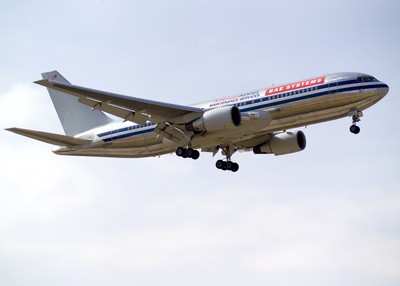
MANUFACTURER: The Boeing Company Model 767 Airplanes
SUBJECT: Airworthiness Directive 2011-12-11

SUMMARY: The FAA is superseding an existing airworthiness directive (AD) for the products listed above.

That AD currently requires, for certain airplanes, reworking the bonding jumper assemblies on the drain tube assemblies of the slat track housing of the wings. For certain other airplanes, the existing AD requires repetitive inspections of the drain tube assemblies of the slat track housing of the wings to find discrepancies, corrective actions if necessary, and terminating action for the repetitive inspections.

This new AD also requires replacing the drain tube assemblies. For certain airplanes, this new AD also requires installing an additional electrostatic bond path for the number 5 and 8 inboard slat track drain tube assemblies. For certain other airplanes, this new AD also requires reworking the bonding jumper assembly. This new AD also revises the applicability to include additional airplanes.

This AD was prompted by (1) reports of fuel leaks from certain drain locations of the slat track housing near the engine exhaust nozzle, which could result in a fire when the airplane is stationary, or taxiing at low speed; (2) reports of a bonding jumper assembly of certain drain tubes that did not meet bonding specifications and could result in electrostatic discharge and an in-tank ignition source; and (3) reports of fuel leaks onto the main landing gear (MLG) as a result of a cracked drain tube at the number 5 or 8 slat track housing, which could let fuel drain from the main fuel tanks into the dry bay area of the wings and onto hot MLG brakes and result in a fire.

FMI: http://rgl.faa.gov/Regulatory_and_Guidance_Library/rgAD.nsf/0/56771F843B0C0C06862578B2004D6A44?OpenDocument

Advertisement

More News

Aero-News: Quote of the Day (12.18.25)

“These new aircraft strengthen our ability to respond quickly, train effectively and support communities nationwide. Textron Aviation has been a steadfast supporter in helpin>[...]

Classic Aero-TV: Viking Twin Otter 400--Bringing the DHC-6 Back Into Production

From 2011 (YouTube Edition): Rugged, Legendary, STOL Twin Makes A Comeback The de Havilland Twin Otter is an airplane with a long history, and it gained a reputation as a workhorse>[...]

NTSB Final Report: Rans Employee Flying Club Rans S-6ES Coyote II

A Wind Gust Lifted The Right Wing And The Airplane Turned To The Left Analysis: The pilot was departing from a 2,395-ft-long by 50-ft-wide turf runway. The pilot reported that afte>[...]

ANN FAQ: Submit a News Story!

Have A Story That NEEDS To Be Featured On Aero-News? Here’s How To Submit A Story To Our Team Some of the greatest new stories ANN has ever covered have been submitted by our>[...]

ANN's Daily Aero-Term (12.18.25): Braking Action Advisories

Braking Action Advisories When tower controllers receive runway braking action reports which include the terms “medium," “poor," or “nil," or whenever weather con>[...]

blog comments powered by Disqus



Advertisement

Advertisement

Podcasts

Advertisement

© 2007 - 2025 Web Development & Design by Pauli Systems, LC

