
Apaches in South Korea | Aero-News Network
Aero-News Network
RSS icon RSS feed
podcast icon MP3 podcast
Subscribe Aero-News e-mail Newsletter Subscribe

Airborne Unlimited -- Most Recent Daily Episodes

Episode Date

Airborne-Monday

Airborne-Tuesday

Airborne-Wednesday Airborne-Thursday

Airborne-Friday

Airborne On YouTube

Airborne-Unlimited-12.01.25

AirborneNextGen-
12.02.25

Airborne-Unlimited-11.19.25

Airborne-AffordableFlyers-11.20.25

AirborneUnlimited-11.21.25

LIVE MOSAIC Town Hall (Archived): www.airborne-live.net

Wed, Jun 18, 2003

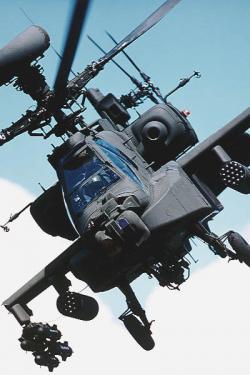
Apaches in South Korea

Arrival of the Boeing AH-64D Apache Longbow helicopters this month in South Korea marks completion of U.S. Army efforts to field an Apache Longbow battalion in the region. This newest Apache Longbow unit joins another element, which arrived in South Korea in late 2001 as the first international deployment of U.S. Army Apache Longbows. A third foreign-based U.S. Army Apache Longbow unit is based in Germany.

Built by Boeing in Mesa (AZ), Apache Longbow helicopters are the world’s most advanced multi-role combat helicopters. These U.S. Army Apaches, which had been in Korea as AH-64As, were remanufactured and returned to duty in their next-generation configuration. The U.S. Army is modernizing its fleet of AH-64A Apaches into next-generation Apache Longbow helicopters, which link a wide range of avionics, electronics and weapons into one fully-integrated weapon system.

U.S. Army AH-64A Apaches and AH-64D Apache Longbows were deployed overseas in 2003 in support of Operation Iraqi Freedom. Apache helicopters are fielded around the world, including the U.S. Army’s deployment to Afghanistan for Operation Anaconda as part of the war against terrorism.

This new unit spent the last year transitioning to Apache Longbows as an AH-64A Apache battalion. To qualify as combat ready, the men and women of the squadron completed a series of comprehensive classroom, flight and field exercises. Soldiers underwent a rigorous field examination, which included three live-fire exercises, and flew about 3,000 hours during the training program.

Led by the 21st Cavalry Brigade, unit members completed eight months of extensive training at Fort Hood, Texas. They returned to South Korea by ship in May after being certified in April as the eighth combat-ready Apache Longbow battalion.

FMI: www.boeing.com/rotorcraft/military/ah64d/flash.html

Advertisement

More News

ANN's Daily Aero-Term (12.01.25): Convective SIGMET

Convective SIGMET A weather advisory concerning convective weather significant to the safety of all aircraft. Convective SIGMETs are issued for tornadoes, lines of thunderstorms, e>[...]

ANN's Daily Aero-Linx (12.01.25)

Aero Linx: United Flying Octogenarians WELCOME to a most extraordinary group of aviators, the United Flying Octogenarians (UFO). Founded in 1982 with just a handful of pilots, we h>[...]

NTSB Final Report: Remos Aircraft GmbH Remos GX

Pilot’s Decision To Attempt Takeoff With Frost Covering The Airplane’s Wings Analysis: The pilot of the light sport airplane was preparing to depart for a cross-country>[...]

Aero-News: Quote of the Day (12.02.25)

“We’ve paid for the cable line’s repair for the customer and have apologized for the inconvenience this caused them...” Source: Some followup info from an A>[...]

ANN's Daily Aero-Term (12.02.25): Coupled Approach

Coupled Approach An instrument approach performed by the aircraft autopilot, and/or visually depicted on the flight director, which is receiving position information and/or steerin>[...]

blog comments powered by Disqus



Advertisement

Advertisement

Podcasts

Advertisement

© 2007 - 2025 Web Development & Design by Pauli Systems, LC

