Declared Emergency But Passed Up Smaller Airport For One With
Better MX Options
Second-guessing any pilot's decision making process is a tough
gig... but this is a case where a pilot may have not have been
quite cautious enough in selecting a location for an emergency
landing. According to the NTSB, the pilot of a Malbu Mirage was
being vectored to a small airport by ATC after declaring an
emergency due to power issues, but thereafter decided to divert to
a larger field with better facilities and the availability of a
mechanic. The subsequent landing at Greenwood Le-Fore Airport did
not go so well and the aircraft was significantly damaged though
both occupants were uninjured.
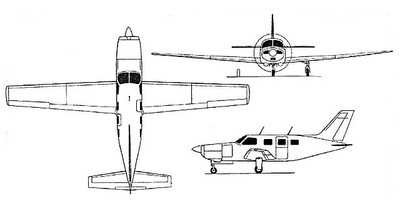
NTSB Identification: ERA11LA224
14 CFR Part 91: General Aviation
Accident occurred Friday, April 01, 2011 in Greenwood, MS
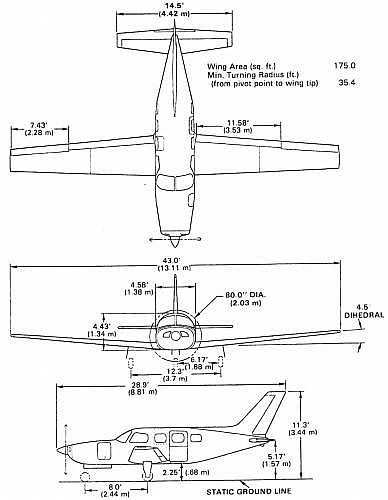
Aircraft: PIPER PA 46-350P, registration: N146DG
Injuries: 2 Uninjured.
This is preliminary information, subject to change, and may
contain errors. Any errors in this report will be corrected when
the final report has been completed.

On April 1, 2011, at 1820 central daylight time, a Piper
PA-46-350P, N146DG, registered to Fountain Blue Management Services
LLC, incurred substantial damage to both wings during a
precautionary landing at Greenwood Le-Fore Airport (GWO),
Greenwood, Mississippi, following a partial loss of engine power
during climb to cruise. The certificated airline transport pilot
and passenger were not injured. The personal flight was conducted
under the provision of 14 Code of Federal Regulations Part 91.
Visual meteorological conditions prevailed and an instrument rules
flight plan was filed for the planned flight to Lakefront Airport
(NEW), New Orleans, Louisiana. The flight originated from Memphis
International Airport (MEM), Memphis, Tennessee at 1720.
The pilot reported that while climbing through 13,000 feet above
ground level, he heard a loud "pop" and observing a large reduction
in manifold pressure. The pilot decided to make a precautionary
landing, declared an emergency to the air traffic control (ATC)
controller, and initiated a slow descent to the nearest suitable
airport recommend by ATC. The pilot asked the controller if there
was a mechanic at that airport, and the controller stated no. The
controller informed the pilot that GWO had a control tower and a
mechanic. The pilot then decided to divert to GSO, which was
further than the original alternate airport.
He obtained an amended clearance from ATC for GWO and continued
his descent to avoid a cloud layer. The passenger visually
identified GWO, but they were a "little high" and the pilot planned
on flying a downwind leg to final approach for runway 18; however,
the oil pressure was low and decreasing rapidly, so the pilot
decided to land straight ahead on runway 18. He lowered the landing
gear to assist in losing altitude and the oil pressure gauge
indicated "0" with the oil warning light illuminated. The pilot
continued to run the engine until he thought he could make the
runway, and then he shut the engine down and completed the
emergency landing checklist. He raised the landing gear, but the
airspeed decreased. He lined up with a grassy area prior to the
runway to avoid the instrument landing system and then extended the
landing gear and flaps. The airplane touched down hard and collided
with a ditch.
The airplane was recovered to GWO pending further examination by
the engine and airframe manufacture under the supervision of a
Federal Aviation Administration Inspector.



 ANN's Daily Aero-Term (12.08.25): Decision Altitude (DA)


 See All