
US Coast Guard Changes Course On Satellite Launch | Aero-News Network
Aero-News Network
RSS icon RSS feed
podcast icon MP3 podcast
Subscribe Aero-News e-mail Newsletter Subscribe

Airborne Unlimited -- Most Recent Daily Episodes

Episode Date

Airborne-Monday

Airborne-Tuesday

Airborne-Wednesday Airborne-Thursday

Airborne-Friday

Airborne On YouTube

Airborne-Unlimited-12.08.25

AirborneNextGen-
12.09.25

Airborne-Unlimited-12.10.25

Airborne-FltTraining-12.04.25

AirborneUnlimited-12.05.25

AFE 2025 LIVE MOSAIC Town Hall (Archived): www.airborne-live.net

Sat, May 14, 2022

US Coast Guard Changes Course On Satellite Launch

Space-X’s Falcon 9 Halts Launch When Cruise Ship Enters Zone

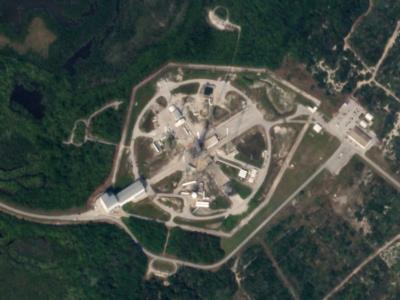
In early February 2022, the United States Coast Guard (USCG) opened an investigation following the incursion of a cruise ship into the ‘no launch zone’ less than 30 seconds prior to the launch of a Space-X rocket. 

The Royal Caribbean cruise ship, ‘Harmony of the Seas’ was returning to port Canaveral, which is approximately 10 miles south of the launch site of the Kennedy Space Center in Florida.

Apparently, the February launch was the 4th attempt in as many days that SpaceX tried to launch the ‘COSMO-SkyMed Second Generation FM2’ mission to put the Italian Space Agency’s observation satellite into space. Despite the delay, Space-X was still on track to meet its goal of launching 52 missions in 2022. We’ve observed that besides technical challenges, weather is a regular factor that interferes with rocket launches, and that numerous cancellations and rescheduling leads to a tuning out of communications, and that the maritime community is very paper-driven in that regard.

Subsequently, the USCG implemented three changes they hope will avoid or reduce future occurrences: 1) electronic dissemination of information, 2) downsized “keep-out zones” that permit maritime activity to proceed despite an ‘active launch’ status, and 3) USCG to study historical maritime traffic to determine consistent.

The USCG sector in Jacksonville Florida, in addition to its regular ‘maritime’ duties is tasked with overseeing space-related operations, particularly since the launch site is surrounded by ongoing unscheduled seafaring activity, except perhaps for the cruise ships as they do come and go on a schedule. The USCG is responsible for making sure the immediate launch areas are clear, provide search and rescue (SAR) support if a launch aborts over water in any one of seven zones (if they fall on target).

FMI: https://spacex.com, https://uscg.mil


Advertisement

More News

ANN's Daily Aero-Term (12.08.25): Decision Altitude (DA)

Decision Altitude (DA) A specified altitude (mean sea level (MSL)) on an instrument approach procedure (ILS, GLS, vertically guided RNAV) at which the pilot must decide whether to >[...]

ANN's Daily Aero-Linx (12.08.25)

Aero Linx: T-34 Association, Inc. The T-34 Association was formed in July 1975 so that individuals purchasing then military surplus T-34As had an organization which would provide s>[...]

NTSB Final Report: Piper PA-31T3

As He Released The Brakes To Begin Taxiing, The Brake Pedals Went To The Floor With No Braking Action Analysis: The pilot reported that during engine start up, he applied the brake>[...]

Aero-News: Quote of the Day (12.08.25)

“Legislation like the Mental Health in Aviation Act is still imperative to hold the FAA accountable for the changes they clearly acknowledge need to be made... We cannot wait>[...]

Airborne-Flight Training 12.04.25: Ldg Fee Danger, Av Mental Health, PC-7 MKX

Also: IAE Acquires Diamond Trainers, Army Drones, FedEx Pilots Warning, DA62 MPP To Dresden Tech Uni The danger to the flight training industry and our future pilots is clear. Dona>[...]

blog comments powered by Disqus



Advertisement

Advertisement

Podcasts

Advertisement

© 2007 - 2025 Web Development & Design by Pauli Systems, LC

