Wed, Jul 08, 2009
Development Of Open Standards Will Speed Deployment,
Expansion
 The FAA and the
Network Centric Operations Industry Consortium (NCOIC) have entered
into an agreement to advance the Enterprise Architecture of
NextGen, FAA's national airspace (NAS) transformation program.
NCOIC's FAA contract has a potential value of approximately ten
million dollars and spans five years.
The FAA and the
Network Centric Operations Industry Consortium (NCOIC) have entered
into an agreement to advance the Enterprise Architecture of
NextGen, FAA's national airspace (NAS) transformation program.
NCOIC's FAA contract has a potential value of approximately ten
million dollars and spans five years.
The NCOIC will analyze and evaluate NextGen's enterprise
architecture views, products, plans, net-centric patterns and
operational concepts. Working collaboratively, its members will
develop "voice of industry" recommendations about applying
net-centric standards to the NextGen procurement, as a way to
achieve interoperability in the NAS and, potentially, the skies
beyond U.S. borders.
"We anticipate that the standards recommendations, best
practices and net-centric pattern development derived from our
collaboration will strengthen NextGen's requirements," said Terry
Morgan, NCOIC executive chairman. "Our recommendations will be
founded on the thoughts of multi-national, multi-industry leaders
in net-centricity."
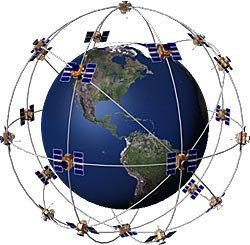 Industry's review of a
major acquisition's enterprise architecture - prior to developing
proposal requirements - is a pioneering effort conceived by the
FAA. Its agreement with NCOIC supports a forum for peer review,
through which industry can provide its expertise to FAA throughout
NextGen's lifecycle, from research through disposition; FAA will
remain the final authority on enterprise architecture
decisions.
Industry's review of a
major acquisition's enterprise architecture - prior to developing
proposal requirements - is a pioneering effort conceived by the
FAA. Its agreement with NCOIC supports a forum for peer review,
through which industry can provide its expertise to FAA throughout
NextGen's lifecycle, from research through disposition; FAA will
remain the final authority on enterprise architecture
decisions.
The significance of implementing a NextGen
enterprise architecture based on open standards - and designed to
enable network-centric operations - includes the following:
delivering vital information to those who operate the NAS; speeding
system development and reducing procurement cost through re-use of
software, patterns and best practices; effectively bringing legacy
systems into an interoperable enterprise; and supporting the
seamless integration of rapidly emerging commercial technology into
NextGen. The resulting benefit could be a technologically
"evergreen" system that enhances controllers' ability to manage
traffic, increases passenger safety, reduces airport flight delays,
and advances the airlines' drive to achieve greener operations.
More News
After Draining Both Wing Fuel Tanks, A Significant Amount Of Water Was Observed In The Right Wing Fuel Tank Analysis: The pilot, who was also the owner of the experimental amateur->[...]
“Airbus apologises for any challenges and delays caused to passengers and airlines by this event. The Company thanks its customers, the authorities, its employees and all rel>[...]
High Speed Taxiway A long radius taxiway designed and provided with lighting or marking to define the path of aircraft, traveling at high speed (up to 60 knots), from the runway ce>[...]
Aero Linx: Taylorcraft Foundation, Inc. The Taylorcraft Foundation is exclusively organized for charitable, educational & scientific activities and will preserve the history an>[...]
Also: USAF Reaper Accident, Baikonur Damage, Horizon eVTOL IFR/FIKI, New Glenn Update Honda has outlined its clearest timeline yet for its entry into the world of electric vertical>[...]



 NTSB Final Report: Patriot Aircraft LLC CX1900A


 See All