Thu, Oct 16, 2008
Engines Should Be Pulled From Service Pending Checks, Board
Says
As a result of its ongoing investigation of an incident
involving a Pratt & Whitney PW2037 engine experiencing an
uncontained failure, the National Transportation Safety Board
issued an urgent recommendation Thursday to the Federal Aviation
Administration to require all Pratt & Whitney PW2037 engines be
removed from service for inspection of the second stage turbine
hubs when they have accumulated significantly fewer hours (10,880)
and/or cycles (4,392) than the incident engine.
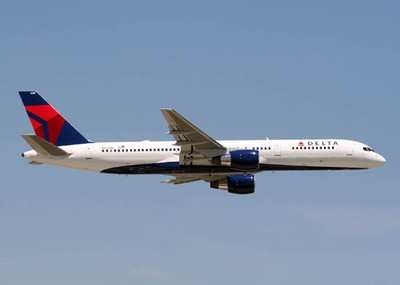
On August 6, 2008, Delta Air Lines flight 624, a Boeing 757-232
equipped with PW2037 engines, experienced an uncontained failure of
the right engine’s high pressure turbine second stage hub at
McCarran International Airport in Las Vegas, NV.
According to the pilots, at the start of the takeoff roll they
heard a loud bang and observed that the right engine had lost
power. The pilots rejected the takeoff and the airplane returned to
the gate. All 166 passengers and the crew of four deplaned. There
was no fire or injuries.
 Examination of the incident airplane’s right engine
revealed a hole in the bottom of the core cowl that was in line
with a hole through the engine’s high pressure turbine. The
inspection also revealed missing lugs and cracks in the turbine
hub. Additionally, the Safety Board learned that at least four
other PW2037 second stage turbine hubs have had cracks in the blade
retaining lugs. And, NTSB has also learned that, during a routine
overhaul, an American Airlines PW2037 second stage turbine hub with
cracks in two adjacent blade retaining lugs was reported. The
Safety Board has requested information on all of these
hubs.
Examination of the incident airplane’s right engine
revealed a hole in the bottom of the core cowl that was in line
with a hole through the engine’s high pressure turbine. The
inspection also revealed missing lugs and cracks in the turbine
hub. Additionally, the Safety Board learned that at least four
other PW2037 second stage turbine hubs have had cracks in the blade
retaining lugs. And, NTSB has also learned that, during a routine
overhaul, an American Airlines PW2037 second stage turbine hub with
cracks in two adjacent blade retaining lugs was reported. The
Safety Board has requested information on all of these
hubs.
"These discoveries raise serious concerns and warrant immediate
action by the FAA," said NTSB Acting Chairman Mark V. Rosenker. "A
string of consecutively fractured blade retaining lugs could result
in the simultaneous release of multiple blades, which would exceed
the design capacity of the engine’s cases and result in an
uncontainment. Preventive safety measures must be taken."
The NTSB issued a second recommendation Thursday that would
require a continuing inspection schedule for the hubs until the
cause of previous instances of cracking is found and corrective
action is identified.
The Safety Board is still investigating this incident.
More News
Light Gun A handheld directional light signaling device which emits a brilliant narrow beam of white, green, or red light as selected by the tower controller. The color and type of>[...]
“We have performed extensive ground testing by comparing warm up times, full power tethered pulls, and overall temperatures in 100 degree environments against other aircraft >[...]
While Taxiing To Parking The Right Landing Gear Leg Collapsed, Resulting In Substantial Damage Analysis: The pilot made a normal approach with full flaps and landed on the runway. >[...]
From 2014 (YouTube Edition): Exotic Rebuild Reveals Aerial Work Of Art During EAA AirVenture 2014, ANN's Michael Maya Charles took the time to get a history lesson about a great ai>[...]
Also: Project Talon, McFarlane Acquisition, Sky-Tec Service, JPL Earth Helo Tests Bombardier has earned a round of applause from the business aviation community, celebrating the fo>[...]



 ANN's Daily Aero-Term (12.13.25): Light Gun


 See All