Tue, May 13, 2003
New Rule Result of Input From Airlines And The Disabled
 The US
Department of Transportation (DOT), in order to clarify the rights
and obligations of passengers with disabilities who travel with
service animals, today issued revised guidance on the
transportation of these animals on airline aircraft. The
revisions were based on a joint proposal of the disability
community and airline industry that was submitted to the department
in late 2002.
The US
Department of Transportation (DOT), in order to clarify the rights
and obligations of passengers with disabilities who travel with
service animals, today issued revised guidance on the
transportation of these animals on airline aircraft. The
revisions were based on a joint proposal of the disability
community and airline industry that was submitted to the department
in late 2002.
Under the new guidelines adopted from the joint proposal, the
definition of service animal has been clarified to specifically
include emotional support animals. In addition, the guidance
classifies certain specific animals as dangerous and thereby
permits their exclusion from the aircraft cabin.
In 1990, DOT issued regulations implementing the Air Carrier
Access Act, which banned discrimination in air travel based on
disability. In those rules, the department required that air
carriers permit guide dogs and other service animals used by
persons with disabilities to accompany the person in flight.
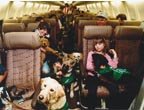
New Rule Reflects New Capabilities For Disabled
Since the initial service animal guidance was published in
November 1996, a wider variety of animals has been trained to
assist individuals with disabilities. Whereas in the past most
service animals were guide dogs, today persons with disabilities
use other animals - such as cats and monkeys - as service
animals.
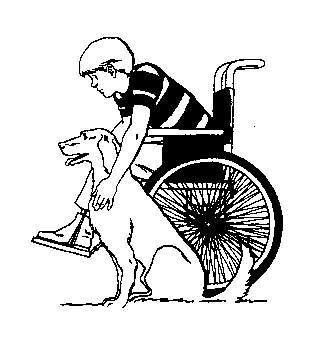
 In addition, service animals assist people with
their disabilities by performing a wider variety of functions, such
as pulling a wheelchair or alerting a person with epilepsy that a
seizure is imminent. Other animals provide emotional support for
passengers with mental illnesses. These more recent
developments have sometimes made it difficult for airline employees
to distinguish service animals from pets, and some pets are claimed
to be service animals to get around legitimate airline restrictions
on the carriage of pets.
In addition, service animals assist people with
their disabilities by performing a wider variety of functions, such
as pulling a wheelchair or alerting a person with epilepsy that a
seizure is imminent. Other animals provide emotional support for
passengers with mental illnesses. These more recent
developments have sometimes made it difficult for airline employees
to distinguish service animals from pets, and some pets are claimed
to be service animals to get around legitimate airline restrictions
on the carriage of pets.
Airline industry representatives and those from the disability
community worked for over a year revising the department's existing
guidance. The principal aims of this effort were to prevent
abuse of the service animal rules and to ensure that passengers
with disabilities are not prohibited from boarding with their
service animals.
More News
Light Gun A handheld directional light signaling device which emits a brilliant narrow beam of white, green, or red light as selected by the tower controller. The color and type of>[...]
“We have performed extensive ground testing by comparing warm up times, full power tethered pulls, and overall temperatures in 100 degree environments against other aircraft >[...]
While Taxiing To Parking The Right Landing Gear Leg Collapsed, Resulting In Substantial Damage Analysis: The pilot made a normal approach with full flaps and landed on the runway. >[...]
From 2014 (YouTube Edition): Exotic Rebuild Reveals Aerial Work Of Art During EAA AirVenture 2014, ANN's Michael Maya Charles took the time to get a history lesson about a great ai>[...]
Also: Project Talon, McFarlane Acquisition, Sky-Tec Service, JPL Earth Helo Tests Bombardier has earned a round of applause from the business aviation community, celebrating the fo>[...]



 ANN's Daily Aero-Term (12.13.25): Light Gun


 See All