

AeroSports Update: What Were The Good Old Days Of Flight Training? | Aero-News Network
Aero-News Network
RSS icon RSS feed
podcast icon MP3 podcast
Subscribe Aero-News e-mail Newsletter Subscribe

Airborne Unlimited -- Most Recent Daily Episodes

Episode Date

Airborne-Monday

Airborne-Tuesday

Airborne-Wednesday Airborne-Thursday

Airborne-Friday

Airborne On YouTube

Airborne-Unlimited-12.08.25

AirborneNextGen-
12.02.25

Airborne-Unlimited-12.03.25

Airborne-FltTraining-12.04.25

AirborneUnlimited-12.05.25

AFE 2025 LIVE MOSAIC Town Hall (Archived): www.airborne-live.net

Tue, Nov 01, 2016

AeroSports Update: What Were The Good Old Days Of Flight Training?

Whenever Someone Talks About ‘The Good Old Days’ Of Anything, It’s Always A Matter Of Perspective And Personal Preference

When you have a bunch of older GA pilots (most of them are older now) sitting around drinking coffee and telling war stories about flight training, it’s common to hear someone bring up “the good old days.” This leads to the question of; what were the good old days?

The basic regulations regarding flight training and pilot certification were created in 1938 and no major changes in certification licensing occurred until about 1980. So, I guess if we’re going to define the good old days, let’s use somewhere between 1938 in 1980.

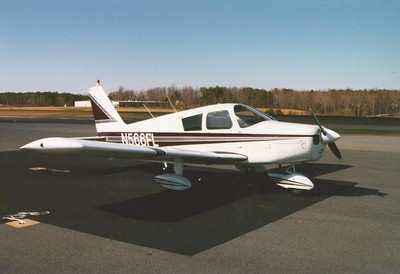
The training was quite predictable in those days. Everyone started training for the private pilot certificate. For some students, the private certificate was the end goal, and others used it as a starting point to a career in aviation. Every school’s training program looked similar and the most common consideration was whether you wanted to fly a Cessna, Piper, or a Beechcraft airplane if you wanted to be upscale.

In 1980 the FAA created the rules regarding ultralights which now gave pilots a choice of not being certified at all. That was a major change in pilot certification rules. With this change the choice became; you could become a private pilot or you could fly ultralights with no certification required.

Then, in 1991 the recreational pilot license was created in an attempt to simplify pilot certification and reduce costs. A big change here was that students now had an option to choose certain types of training. For example, a recreational pilot certificate trainee could choose the level of cross-country and tower-controlled airspace training to restrict or expand flying privileges. This was also the first pilot license that had restrictions on types of airplanes to be flown and number of passengers carried.

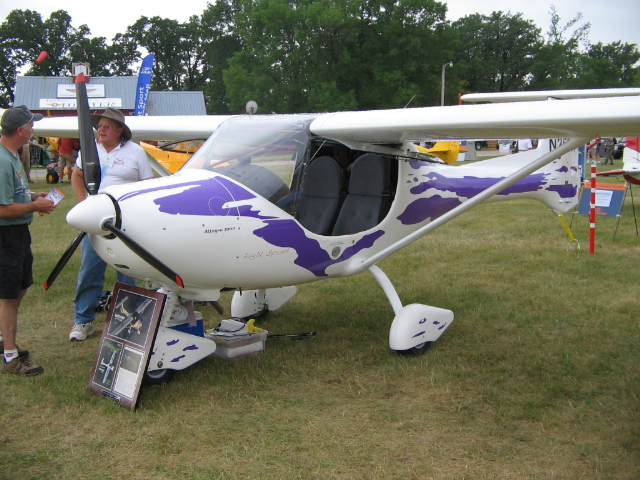
The year 2004 brought on new options with the sport pilot license. Students going for this certificate had even lower hourly training requirements and more options on training received to determine their pilot privileges. It also created the term, “light sport aircraft” and eliminated the requirement for an FAA medical certificate.

So, if we define the “good old days” as that time when a new pilot only had one choice for initial pilot certification, then we are overlooking all the options that are available today. Initial flight training has become more complex because of the options available in training, but it has also opened the door for new ways to start flying.

When you are seeking advice for flight training, be sure you’re talking to someone that understands the “new good old days.”

(Images from file)

FMI: http://www.faa.gov/regulations_policies/

Advertisement

More News

NTSB Final Report: Patriot Aircraft LLC CX1900A

After Draining Both Wing Fuel Tanks, A Significant Amount Of Water Was Observed In The Right Wing Fuel Tank Analysis: The pilot, who was also the owner of the experimental amateur->[...]

Aero-News: Quote of the Day (12.06.25)

“Airbus apologises for any challenges and delays caused to passengers and airlines by this event. The Company thanks its customers, the authorities, its employees and all rel>[...]

ANN's Daily Aero-Term (12.06.25): High Speed Taxiway

High Speed Taxiway A long radius taxiway designed and provided with lighting or marking to define the path of aircraft, traveling at high speed (up to 60 knots), from the runway ce>[...]

ANN's Daily Aero-Linx (12.06.25)

Aero Linx: Taylorcraft Foundation, Inc. The Taylorcraft Foundation is exclusively organized for charitable, educational & scientific activities and will preserve the history an>[...]

Airborne-NextGen 12.02.25: Honda eVTOL, Arctus High-Alt UAS, Samson Patent

Also: USAF Reaper Accident, Baikonur Damage, Horizon eVTOL IFR/FIKI, New Glenn Update Honda has outlined its clearest timeline yet for its entry into the world of electric vertical>[...]

blog comments powered by Disqus



Advertisement

Advertisement

Podcasts

Advertisement

© 2007 - 2025 Web Development & Design by Pauli Systems, LC

