
Cessna Renames New Turbo Skylane Aircraft | Aero-News Network
Aero-News Network
RSS icon RSS feed
podcast icon MP3 podcast
Subscribe Aero-News e-mail Newsletter Subscribe

Airborne Unlimited -- Most Recent Daily Episodes

Episode Date

Airborne-Monday

Airborne-Tuesday

Airborne-Wednesday Airborne-Thursday

Airborne-Friday

Airborne On YouTube

Airborne-Unlimited-12.08.25

AirborneNextGen-
12.09.25

Airborne-Unlimited-12.10.25

Airborne-AffordableFlyers-12.11.25

AirborneUnlimited-12.12.25

AFE 2025 LIVE MOSAIC Town Hall (Archived): www.airborne-live.net

Wed, Aug 15, 2012

Cessna Renames New Turbo Skylane Aircraft

Says New Moniker Better Reflects 'Innovative Features' Of The Updated Plane

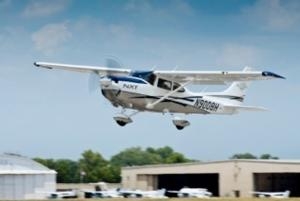
Cessna  is renaming its newest single engine product. The jet-fuel burning turbo aircraft introduced at Oshkosh last month as the Turbo Skylane NXT will now be called the Turbo Skylane JT-A (aircraft pictured in image from Cessna).

As confirmed by customer feedback at Oshkosh, the name Turbo Skylane JT-A better captures and reflects the innovative features of the new plane than the NXT designation. It was also brought to Cessna's attention shortly after the announcement of the Turbo Skylane NXT that there was a previous use of the NXT name in the aviation industry of which Cessna had not been aware. Cessna both respects the trademark rights of others and desires to obtain registered trademark status on its name for this important new product.

In introducing the aircraft at Oshkosh, Cessna said that the Turbo 182 is a result of market research and has already undergone extensive reliability testing, as well as flight testing. The Safran-made SMA engine is engineered specifically for aviation and is already FAA and EASA certified. The engine uses only 11 gallons per hour of the typically lower-cost Jet A fuel at the estimated maximum cruise speed of 155 knots.

“Operators can now take advantage of the wider availability of Jet A with the potential to fly farther on one gallon of gas than you can with traditional avgas aircraft,” Umscheid said. “This is a game-changer that opens up new markets and new regions of the world due to its versatility and performance.”

The fuel technology used in this engine eliminates concerns about carbon monoxide emissions, fuel mixtures, propeller control and exhaust gas. The engine operates at a lower propeller speed. As a result, the turbocharger technology delivers a quieter flight line and reduces noise pollution. There are zero lead emissions and zero CO emissions. Flight at the maximum cruise speed demonstrates greater fuel efficiency, and will burn approximately 30 percent to 40 percent less fuel than comparable avgas engines.

FMI: www.cessna.com

Advertisement

More News

ANN's Daily Aero-Term (12.13.25): Light Gun

Light Gun A handheld directional light signaling device which emits a brilliant narrow beam of white, green, or red light as selected by the tower controller. The color and type of>[...]

Aero-News: Quote of the Day (12.13.25)

“We have performed extensive ground testing by comparing warm up times, full power tethered pulls, and overall temperatures in 100 degree environments against other aircraft >[...]

NTSB Final Report: Gippsland GA-8

While Taxiing To Parking The Right Landing Gear Leg Collapsed, Resulting In Substantial Damage Analysis: The pilot made a normal approach with full flaps and landed on the runway. >[...]

Classic Aero-TV: Historically Unique -- Marlin Horst's Exquisite Fairchild 71

From 2014 (YouTube Edition): Exotic Rebuild Reveals Aerial Work Of Art During EAA AirVenture 2014, ANN's Michael Maya Charles took the time to get a history lesson about a great ai>[...]

Airborne 12.12.25: Global 8000, Korea Pilot Honors, AV-30 Update

Also: Project Talon, McFarlane Acquisition, Sky-Tec Service, JPL Earth Helo Tests Bombardier has earned a round of applause from the business aviation community, celebrating the fo>[...]

blog comments powered by Disqus



Advertisement

Advertisement

Podcasts

Advertisement

© 2007 - 2025 Web Development & Design by Pauli Systems, LC

