
SAGE III-ISS Prepped For Flight To Space Station | Aero-News Network
Aero-News Network
RSS icon RSS feed
podcast icon MP3 podcast
Subscribe Aero-News e-mail Newsletter Subscribe

Airborne Unlimited -- Most Recent Daily Episodes

Episode Date

Airborne-Monday

Airborne-Tuesday

Airborne-Wednesday Airborne-Thursday

Airborne-Friday

Airborne On YouTube

Airborne-Unlimited-12.08.25

AirborneNextGen-
12.09.25

Airborne-Unlimited-12.10.25

Airborne-AffordableFlyers-12.11.25

AirborneUnlimited-12.12.25

AFE 2025 LIVE MOSAIC Town Hall (Archived): www.airborne-live.net

Wed, Feb 16, 2011

SAGE III-ISS Prepped For Flight To Space Station

Stratospheric Aerosol And Gas Experiment Earth-Observing Satellite Instrument To Fly In Three Years

The SAVE III ISS Instrument is set to be tested Tuesday morning at Langley headquarters in Virginia.

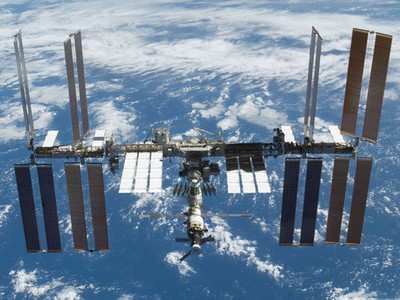
SAGE stands for Stratospheric Aerosol And Gas Experiment. The instrument will measure ozone, water vapor and aerosols in the atmosphere after it is launched into orbit in 2014. SAGE III-ISS will be attached to the space station via robotics.

During testing, the instrument will be commanded to point to and lock onto the sun as if the satellite was engaging a sunrise event over the horizon. Once locked onto the sun, the instrument's scan mirror will scan the full disk of the sun every two seconds. The event will last two to six minutes. At the conclusion of the event, the scan head will be returned to its park position until the next scheduled event. When testing at night, the moon is used as the radiant source and the procedure is the same.

SAGE III is the newest incarnation of two previous SAGE instrument designs. SAGE I was launched in 1979, followed by SAGE II in 1984. SAGE II gathered data for more than 20 years, and the information it collected was part of the effort that led to a global ban on chlorofluorocarbons in 1987. Chlorofluorocarbons were used in air-conditioning units and aerosol spray propellants that contributed to the Earth's shrinking layer of protective ozone, which has begun to recover due to these actions. A third SAGE instrument, SAGE III Meteor-3M, was launched in 2001 on a Russian satellite. It went out of service five years later when the satellite's power supply failed.

SAGE III-ISS is set to launch in 2014. SAGE III-ISS has been stored in a clean room at Langley since 2002. It was called back into service in 2010 and has been undergoing testing at Langley.

FMI: www-sage3.larc.nasa.gov/

Advertisement

More News

ANN's Daily Aero-Term (12.13.25): Light Gun

Light Gun A handheld directional light signaling device which emits a brilliant narrow beam of white, green, or red light as selected by the tower controller. The color and type of>[...]

Aero-News: Quote of the Day (12.13.25)

“We have performed extensive ground testing by comparing warm up times, full power tethered pulls, and overall temperatures in 100 degree environments against other aircraft >[...]

NTSB Final Report: Gippsland GA-8

While Taxiing To Parking The Right Landing Gear Leg Collapsed, Resulting In Substantial Damage Analysis: The pilot made a normal approach with full flaps and landed on the runway. >[...]

Classic Aero-TV: Historically Unique -- Marlin Horst's Exquisite Fairchild 71

From 2014 (YouTube Edition): Exotic Rebuild Reveals Aerial Work Of Art During EAA AirVenture 2014, ANN's Michael Maya Charles took the time to get a history lesson about a great ai>[...]

Airborne 12.12.25: Global 8000, Korea Pilot Honors, AV-30 Update

Also: Project Talon, McFarlane Acquisition, Sky-Tec Service, JPL Earth Helo Tests Bombardier has earned a round of applause from the business aviation community, celebrating the fo>[...]

blog comments powered by Disqus



Advertisement

Advertisement

Podcasts

Advertisement

© 2007 - 2025 Web Development & Design by Pauli Systems, LC

