Tue, May 06, 2003
Russians Stealing Fish; Coast Guard Has Just One Boat
At a hearing Thursday of the Senate Appropriations Committee's
Homeland Security Subcommittee, Senator Ted Stevens (R-AK)
expressed his concern to U.S. Coast Guard Commandant, Admiral
Thomas H. Collins over his agency's current patrol capabilities of
the North Pacific's Maritime Boundary Line. The Coast Guard
currently has one vessel patrolling this area.
 Stevens (right) argued that Alaska, with half the
coastline of the United States and with more than fifty percent of
the naturally-produced fish that Americans consume coming from its
waters, needs more than one cutter. He further noted the increase
in the amount of incursions of the Maritime Boundary Line recently
by several Russian pollock factory trawlers, which have utilized
coordinated incursions to gain access to valuable resources in U.S.
waters.
Stevens (right) argued that Alaska, with half the
coastline of the United States and with more than fifty percent of
the naturally-produced fish that Americans consume coming from its
waters, needs more than one cutter. He further noted the increase
in the amount of incursions of the Maritime Boundary Line recently
by several Russian pollock factory trawlers, which have utilized
coordinated incursions to gain access to valuable resources in U.S.
waters.
"There have been a significant number of incursions in the North
Pacific in the fishing grounds, with an increasing number of
foreign vessels coming across the Maritime Boundary Line, said
Stevens. "I am concerned about that and wonder if it isn't time to
look at some high-tech concepts to increase the surveillance and
decrease the potential for incursions."
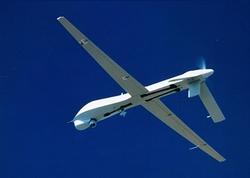 Stevens suggested that the Coast Guard look at the possibility
of using the Predator UAV to patrol the North Pacific's Maritime
Boundary and said he would ask the Committee to request that the
Coast Guard present a plan for the modernization of the
surveillance of these waters. [The Predator can also be armed with
a missile, making it a UCAV. A Predator, you may recall, was used
last year to take out CIA targets riding in a car, in Yemen
--ed.]
Stevens suggested that the Coast Guard look at the possibility
of using the Predator UAV to patrol the North Pacific's Maritime
Boundary and said he would ask the Committee to request that the
Coast Guard present a plan for the modernization of the
surveillance of these waters. [The Predator can also be armed with
a missile, making it a UCAV. A Predator, you may recall, was used
last year to take out CIA targets riding in a car, in Yemen
--ed.]
"I have suggested the use of Predators to patrol the boundary
line and to have onboard warning capabilities to warn foreign
vessels that they are entering U.S. waters. I hope the Committee
will support that concept and that we'll push towards having the
greatest use of new technology available in surveillance of the
maritime boundary, said Stevens. "In my judgement, the use of the
Predator's high technology will make up for the imbalance in terms
of assignment in your vessels. I urge you to get us a plan for
moving forward in that area and using that kind of technology. It
will not increase your manpower. It will not increase your cost
accept in terms of acquisition costs of new technology. The people
that operate the Predators could be sitting in San Diego and work
on the Predators that are over the waters of Alaska. It is an
entirely new concept of lifesaving and protection of our resource
that I think we've got to move into as rapidly as possible," said
Stevens.
More News
Its Offerings Are Lighter, Cleaner, and Now Pushing Past 1,000nm on SAF Jet Fuel DeltaHawk’s diesel-powered aircraft lineup has seen incredible upgrades over the last few yea>[...]
The Airplane Experienced A Total Loss Of Engine Power On December 3, 2025, about 1600 central standard time, a Mooney Aircraft Corp. M20K, N57229, was substantially damaged when it>[...]
Make Sure You NEVER Miss A New Story From Aero-News Network Do you ever feel like you never see posts from a certain person or page on Facebook or Instagram? Here’s how you c>[...]
Aero Linx: European Society of Aerospace Medicine (ESAM) As a pan-European, independent forum, it works to promote the safety and health of all persons involved in aviation and spa>[...]
“We are excited to see Wisk achieve this milestone, and I’m so proud of the team that made it possible. The team at Wisk has built advanced technologies across flight c>[...]



 Aero-TV: DeltaHawks Diesel Power Steps Into the Spotlight


 See All