
Researcher: More U.S. Planes Hit Turtles Than Drones | Aero-News Network
Aero-News Network
RSS icon RSS feed
podcast icon MP3 podcast
Subscribe Aero-News e-mail Newsletter Subscribe

Airborne Unlimited -- Most Recent Daily Episodes

Episode Date

Airborne-Monday

Airborne-Tuesday

Airborne-Wednesday Airborne-Thursday

Airborne-Friday

Airborne On YouTube

Airborne-SpecialEpisode-12.15.25

AirborneNextGen-
12.16.25

Airborne-Unlimited-12.10.25

Airborne-AffordableFlyers-12.11.25

AirborneUnlimited-12.12.25

AFE 2025 LIVE MOSAIC Town Hall (Archived): www.airborne-live.net

Mon, Dec 28, 2015

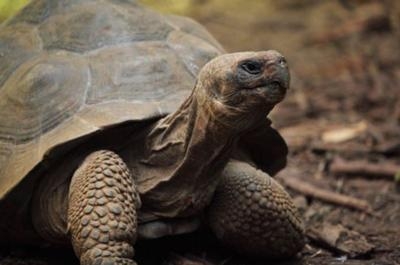
Researcher: More U.S. Planes Hit Turtles Than Drones

Nearly 200 Turtles Have Been Struck By Airplanes Since 1990, No UAVs In The U.S.

In a report meant to be humorous and yet point out that the federal government may be over-reacting to the potential for accidents involving UAVs, a researcher dug into the FAA's Wildlife Strike Database and found that there have been 198 confirmed turtle strikes by airplanes between January 1, 1990 and July 31, 2015.

That compares to 0 confirmed collisions between airplanes and UAVs, though the reports of near-collisions and other incidents has been rising sharply.

The researcher is Eli Dourado. "I picked turtles because turtles are funny," Mashable reports he told the magazine Popular Science. He said that given the disparity between collisions with turtles and UAVs, "maybe we're worrying too much about collisions with drones."

Still, it is obvious that turtles have been around a LOT longer than UAVs. And while it is pretty much a given that a turtle would not collide with an airplane while in flight (though we've heard of stranger things), UAVs sharing airspace with manned aircraft make a collision between those aircraft a much more likely scenario. And the results would likely be far worse.

We report this story only to point out that comparisons can be made for anything ... and in this case, comparing UAVs to turtles is a bit like comparing apples to a barbeque grill. No matter what you fly. Be sure to fly safely.

FMI: http://wildlife.faa.gov

Advertisement

More News

ANN's Daily Aero-Term (12.19.25): Ultrahigh Frequency (UHF)

Ultrahigh Frequency (UHF) The frequency band between 300 and 3,000 MHz. The bank of radio frequencies used for military air/ground voice communications. In some instances this may >[...]

NTSB Prelim: Cirrus Design Corp SR22T

During The 7 Second Descent, There Was Another TAWS Alert At Which Time The Engine Remained At Full Power On October 24, 2025 at 2115 mountain daylight time, a Cirrus SR22T, N740TS>[...]

Classic Aero-TV: The Red Tail Project--Carrying the Torch of the Tuskegee Airmen

From 2009 (YouTube Edition): Educational Organization Aims to Inspire by Sharing Tuskegee Story Founding leader Don Hinz summarized the Red Tail Project’s mission in simple, >[...]

Aero-News: Quote of the Day (12.19.25)

“This feels like an important step since space travel for people with disabilities is still in its very early days... I’m so thankful and hope it inspires a change in m>[...]

Airborne 12.17.25: Skydiver Hooks Tail, Cooper Rotax Mount, NTSB v NDAA

Also: New Katanas, Kern County FD Training, IndiGo’s Botched Roster, MGen. Leavitt Named ERAU Dean The Australian Transportation Safety Bureau (ATSB) has wrapped up its inves>[...]

blog comments powered by Disqus



Advertisement

Advertisement

Podcasts

Advertisement

© 2007 - 2025 Web Development & Design by Pauli Systems, LC

