Thu, Feb 10, 2022
Mehrabad Airport Has Grounded Airliners Piled Up Right Off the Taxiway
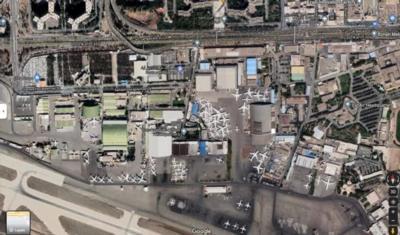
A picture making the rounds from a recent fly by of Earth survey satellites has exposed the state of the Iranian civil air fleet.

A stack of up aircraft of various vintages lie dormant at the Mehrabad International Airport, haphazardly placed together within close walking distance of the warehouses and hangars nearby.
Many of Iran's aircraft have been left high and dry under international sanctions, with a significant portion of the airline fleet in-country using planes that were purchased in more wester-friendly times under the Shah of Iran. Left without a steady source of needed parts to keep their aviation infrastructure running, the country has been forced to resort to a variety of methods, from buying replacement parts on the black and gray markets to indigenously tooling up production for those parts easy enough to imitate with their level of industrial tooling. For the difficult, exotic materials and pieces within expensive airliner engines, the surest method to keep a fleet going is to cannibalize the older or more ragged planes, as seen in the graveyard. A variety of aircraft lie permanently dormant, waiting to give whatever's left of their innards to keep the shoestring fleet hobbling along as long as they can. Old Boeing 707's lie nearly wingtip-to-fuselage alongside 747's, with a variety of Airbus and
vintage Russian equipment littering the tarmac around them.
What makes the development so enthralling to aviation nerds is that the same forces at work which caused so much grief for the country's F-14 Tomcat fleet seem to be coming into play for their civilian equipment as well. In order to keep the Tomcat afloat, the Iranian homegrown parts industry has had to grow in capability and technology over the last 30 years. The development may show a useful point of political pressure, as concessions from the country could be sought in return for civilian air assets (which, if they're desperate enough to cannibalize old soviet equipment, even American hand-me-downs would be an improvement in many ways. The U.S. airline industry seems to have little shortage of clapped-out, uneconomical - but flyable - airliners).
The regime's then-cutting-edge F-14 Tomcats purchase in the 1980's are a high profile example of Iran's can-do attitude towards keeping aircraft far outside the scope of economical viability elsewhere, doing whatever they can to obtain the badly needed maintenance parts for the fleet. In American service, the F-14 was a maintenance hog, requiring around 50 service hours per flight hour in service, a number that its most modern replacements have cut down to 10 on a good day. Iran was so desperate for the badly needed equipment to keep their collection going, it became a game of cat and mouse for American intelligence agencies and illicitly-traded F-14 parts. Middlemen all over the country sought to buy up spares for the temperamental TF-30 engine and ship them through multiple legs around the world for use in Iran. The problem became so widespread, that once the F-14 was retired from Navy service in 2006, President Bush signed into law a service-wide program that saw 150 of the planes shredded to
prevent the surplus falling into Iranian hands. Even those intended for display at museums were not spared the wrath of the junker, being hollowed out of nearly anything that wasn't necessary to remain a Tomcat-shaped sculpture, from o-rings to fan blades.
More News
"The owners envisioned something modern and distinctive, yet deeply meaningful. We collaborated closely to refine the flag design so it complemented the aircraft’s contours w>[...]
Nonradar Arrival An aircraft arriving at an airport without radar service or at an airport served by a radar facility and radar contact has not been established or has been termina>[...]
From 2022 (YouTube Edition): Still Life with Verve David Uhl was born into a family of engineers and artists—a backdrop conducive to his gleaning a keen appreciation for the >[...]
Also: Electra Goes Military, Miami Air Taxi, Hypersonics Lab, MagniX HeliStrom Amazon’s Prime Air drones are back in the spotlight after one of its newest MK30 delivery drone>[...]
Also: Trailblazing Aviator Betty Stewart, Wind Farm Scrutiny, Chatham Ban Overturned, Airbus Shares Dive A Thunderbird pilot, ID'ed alternately as Thunderbird 5 or Thunderbird 6, (>[...]



 Aero-News: Quote of the Day (12.11.25)


 See All