Sat, Sep 12, 2015
Industry Group Emphasizes That Only The FAA Can Regulate Airspace
In prepared testimony for the House Judiciary Subcommittee on Courts, Intellectual Property, and the Internet, AUVSI President and CEO Brian Wynne Thursday called on the federal government to assert its authority over the National Airspace System (NAS) and preempt state laws that seek to regulate airspace. He also urged the FAA to finalize its long-overdue small UAS rules as quickly as possible to help increase the safety of the skies.
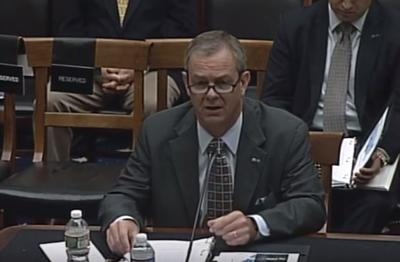
"We are less than three weeks away from the congressionally-mandated deadline of September 30 for the integration of UAS into the national airspace. The FAA has had more than three years to put a small UAS rule in place. There’s tremendous pent up demand for commercial UAS operations; yet the FAA isn’t expected to meet this deadline,” Wynne said in prepared remarks.
“The lack of regulations isn’t just limiting the economic potential of this industry; it’s also causing states and municipalities to fill the void with laws that they may not have the authority to enforce. The most recent example is California’s Senate Bill 142, which would have restricted UAS from flying below 350 feet over private property,” Wynne said.
“While my industry supports the safe, non-intrusive use of UAS technology, SB 142 would create inconsistencies with federal law. Only the FAA can regulate airspace; states and municipalities cannot. According to the U.S. Code, 'The United States Government has exclusive sovereignty of airspace of the United States,’” Wynne added.
Wynne urged the federal government to assert its authority and preempt state laws seeking to regulate airspace.
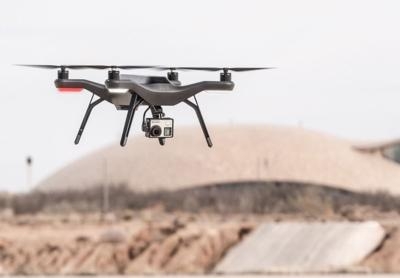
“In the absence of FAA action, we may soon be facing a legal quagmire. Challenges to questionable state laws will tie up the courts and at significant expense to taxpayers. If the FAA feels it needs clarification of its authority, I would urge Congress to provide such clarity and legislatively settle this issue,” Wynne said.
During the first decade following UAS integration into the national airspace, the industry will create more than 100,000 jobs and provide more than $82 billion in economic impact, according to an AUVSI report.
(Brian Wynne pictured in image captured from committee hearing video. Bottom image from file)
More News
Convective SIGMET A weather advisory concerning convective weather significant to the safety of all aircraft. Convective SIGMETs are issued for tornadoes, lines of thunderstorms, e>[...]
Aero Linx: United Flying Octogenarians WELCOME to a most extraordinary group of aviators, the United Flying Octogenarians (UFO). Founded in 1982 with just a handful of pilots, we h>[...]
Pilot’s Decision To Attempt Takeoff With Frost Covering The Airplane’s Wings Analysis: The pilot of the light sport airplane was preparing to depart for a cross-country>[...]
“We’ve paid for the cable line’s repair for the customer and have apologized for the inconvenience this caused them...” Source: Some followup info from an A>[...]
Coupled Approach An instrument approach performed by the aircraft autopilot, and/or visually depicted on the flight director, which is receiving position information and/or steerin>[...]



 ANN's Daily Aero-Term (12.01.25): Convective SIGMET


 See All