Wed, Jan 26, 2022
Testing Moves Forward for Exotic Airborne Supercar
Flying cars, long seen as a hallmark of futuristic aeronautical technology, may finally be on the horizon.
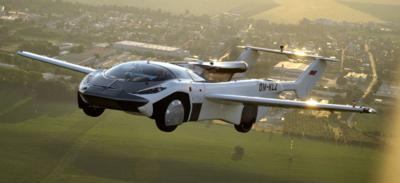
AirCar's prototype has been given its first airworthiness certification from the Slovakian Transport Authority, making it the first of its kind to achieve EASA standards. The testing process took 70+ hours of flight and more than 200 takeoff and landing cycles.
The AirCar reportedly functions throughout the full range of flight and performance maneuvers required, while demonstrating "an astonishing static and dynamic stability in the aircraft mode." The aircraft is powered by a hybrid power system built around a 1.6L BMW engine. In a market segment with a number of historic projects, the flying car has been attempted before, but rarely with such panache and feasibility. With the wings folded into its body, the tail passes for an exuberant aerodynamic wing not unlike the legendary Superbird's, the sleek, lithe form looking just like any other high-end exotic car. The propeller in the back, of course, gives the charade away, but passing for a car is a trick few projects have been able to pull off. With approval given, the AirCar shows promise in its journey towards production.
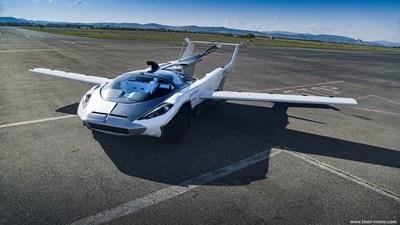
“AirCar certification opens the door for mass production of very efficient flying cars. It is official and the final confirmation of our ability to change mid-distance travel forever,” said Professor Stefan Klein, the inventor, leader of the development team and the test pilot. “50 years ago, the car was the epitome of freedom,” says Anton Zajac, the project cofounder. “AirCar expands those frontiers, by taking us into the next dimension; where road meets sky.”
“Professor Stefan Klein is the world leader in the development of user-friendly Flying Cars. His latest (fifth) version is the pinnacle achievement in the new category of flying cars!” said Dr. Branko Sarh, Boeing senior technical fellow. “The automated transition from road vehicle into an air vehicle and vice versa, deploying/retracting wings and tail is not only the result of pioneering enthusiasm, innovative spirit and courage; it is an outcome of excellent engineering and professional knowledge,” he said after the project's first point to point flight test last year.
More News
“These new aircraft strengthen our ability to respond quickly, train effectively and support communities nationwide. Textron Aviation has been a steadfast supporter in helpin>[...]
From 2011 (YouTube Edition): Rugged, Legendary, STOL Twin Makes A Comeback The de Havilland Twin Otter is an airplane with a long history, and it gained a reputation as a workhorse>[...]
A Wind Gust Lifted The Right Wing And The Airplane Turned To The Left Analysis: The pilot was departing from a 2,395-ft-long by 50-ft-wide turf runway. The pilot reported that afte>[...]
Have A Story That NEEDS To Be Featured On Aero-News? Here’s How To Submit A Story To Our Team Some of the greatest new stories ANN has ever covered have been submitted by our>[...]
Braking Action Advisories When tower controllers receive runway braking action reports which include the terms “medium," “poor," or “nil," or whenever weather con>[...]



 Aero-News: Quote of the Day (12.18.25)


 See All