Mon, Jun 14, 2021
The First Targeted Flight Opportunity Will Occur Between Fall Of 2022 And Mid-2023
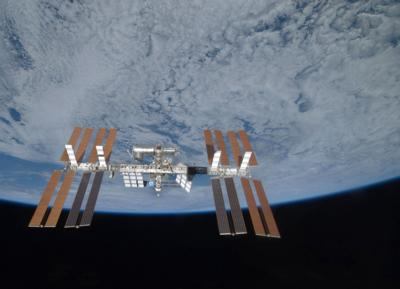
NASA is seeking proposals for two new private astronaut missions to the International Space Station as part of the agency’s efforts to open space to more people than ever before. With these opportunities, US commercial companies will continue to play an essential role in establishing a sustained presence in low-Earth orbit (LEO) through the agency’s Commercial LEO Development Program.
The first targeted flight opportunity will occur between fall of 2022 and mid-2023 and the second will occur between mid-2023 and the end of 2023. Proposals are due Friday, July 9, 2021 at 5 p.m. EDT.
A private astronaut mission involves U.S. commercial spacecraft transporting private astronauts to the space station, where they conduct activities aboard the orbiting laboratory or a commercial structure attached to it. NASA is enabling up to two short-duration private astronaut missions per year.
“This year is truly a renaissance for human spaceflight both as we fly NASA and international partner astronauts on U.S. commercial crew spacecraft to the International Space Station and also as we see the expansion of private astronaut missions,” said Phil McAlister, director of commercial spaceflight development at NASA Headquarters. “As more people fly to space and do more things during their spaceflights, it attracts even more people to do more activities in low-Earth orbit, and reflects the growing market we envisioned when we began the Commercial Crew Program 10 years ago.”
The new targeted flight opportunities will be the second and third private astronaut missions to the International Space Station. NASA signed an agreement with Axiom Space for the first private astronaut mission, to take place no earlier than January 2022.
Each of the new missions may be up to 14 days. Specific dates are dependent on spacecraft traffic to the space station and in-orbit activity planning and constraints. Private astronaut missions must be brokered by a U.S. entity and use U.S. transportation spacecraft that meet NASA’s International Space Station visiting vehicle requirements, policies, and procedures.
More News
From 2023 (YouTube Edition): "Ain’t Your Daddy’s Super Cub”—Don Wade Co-owned by Don and Ron Wade—the former of Don’s Dream Machines, a storied >[...]
Pilot-Rated Passenger Reported That The Pilot Did Not Adequately “Round Out” The Landing Flare And The Airplane Bounced And Yawed To The Right Analysis: The pilot state>[...]
Dead Reckoning Dead reckoning, as applied to flying, is the navigation of an airplane solely by means of computations based on airspeed, course, heading, wind direction, and speed,>[...]
Aero Linx: Lake Amphibian Club This website is created and sponsored by the Lake Amphibian Club, to help spread the word about these wonderful, versatile amphibians that can land j>[...]
“I am deeply honored to be sworn in as NASA administrator. NASA’s mission is as imperative and urgent as ever — to push the boundaries of human exploration, ignit>[...]



 Classic Aero-TV: In Praise of Alabamas Patriot Aircraft USA


 See All