
JPA Enjoys RC Helicoptering at Home | Aero-News Network
Aero-News Network
RSS icon RSS feed
podcast icon MP3 podcast
Subscribe Aero-News e-mail Newsletter Subscribe

Airborne Unlimited -- Most Recent Daily Episodes

Episode Date

Airborne-Monday

Airborne-Tuesday

Airborne-Wednesday Airborne-Thursday

Airborne-Friday

Airborne On YouTube

Airborne-Unlimited-12.08.25

AirborneNextGen-
12.09.25

Airborne-Unlimited-12.10.25

Airborne-AffordableFlyers-12.11.25

AirborneUnlimited-12.12.25

AFE 2025 LIVE MOSAIC Town Hall (Archived): www.airborne-live.net

Wed, Dec 10, 2025

JPA Enjoys RC Helicoptering at Home

Nav Systems Find Great Test Range in the Mojave

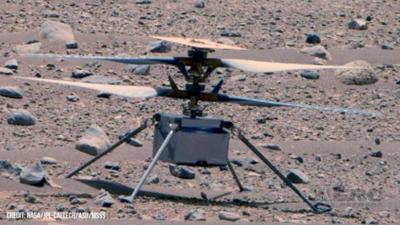
NASA’s Jet Propulsion Laboratory has been working on their future Martian helicopters, after Ingenuity was such a smashing success.

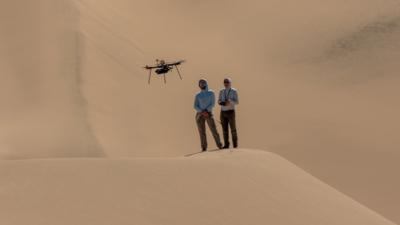
Surprisingly, it’s kind of difficult to ship a helicopter to Mars, given the distance, so they’ve had to search around to see if the meme is true that “we have Mars at home”. The closest we got is the Dumont Dunes, in the Mojave Desert, and so far it’s working pretty well. Researchers have been designing the next generation of martian rotorcraft using the arid region. Sure, the gravity is different, the sand isn’t the same, and the winds aren’t as brutal as Mars… but the cost savings really help those developmental dollars go far! As it happens, the most important part of testing in the Mojave is that featurelessness: Navigation systems need to be trained on endless sands and rolling landscapes.

The Extended Robust Aerial Autonomy program was chosen along with 24 other projects for continuation earlier this year. They’ll follow up on the Ingenuity project with a bigger, longer program now that the first helo proved the concept sound. The navigational weakness of Ingenuity is being tackled now, since its last few flights became difficult among the rolling dunes. 

“Ingenuity was designed to fly over well-textured terrain, estimating its motion by looking at visual features on the ground. But eventually it had to cross over blander areas where this became hard,” said Roland Brockers, a JPL researcher and drone pilot. “We want future vehicles to be more versatile and not have to worry about flying over challenging areas like these sand dunes.”

FMI: www.jpl.nasa.gov

Advertisement

More News

ANN FAQ: Contributing To Aero-TV

How To Get A Story On Aero-TV News/Feature Programming How do I submit a story idea or lead to Aero-TV? If you would like to submit a story idea or lead, please contact Jim Campbel>[...]

Aero-News: Quote of the Day (12.10.25)

“As the excitement builds for the world of flight returning to Oshkosh in 2026, we wanted to ensure that advance tickets are available for those who enjoy giving AirVenture t>[...]

ANN's Daily Aero-Term (12.10.25): North Atlantic High Level Airspace (NAT HLA)

North Atlantic High Level Airspace (NAT HLA) That volume of airspace (as defined in ICAO Document 7030) between FL 285 and FL 420 within the Oceanic Control Areas of Bodo Oceanic, >[...]

Airborne 12.08.25: Samaritan’s Purse Hijack, FAA Med Relief, China Rocket Fail

Also: Cosmonaut Kicked Out, Airbus Scales Back, AF Silver Star, Russian A-60 Clobbered A Samaritan’s Purse humanitarian flight was hijacked on Tuesday, December 2, while atte>[...]

Airborne-Flight Training 12.04.25: Ldg Fee Danger, Av Mental Health, PC-7 MKX

Also: IAE Acquires Diamond Trainers, Army Drones, FedEx Pilots Warning, DA62 MPP To Dresden Tech Uni The danger to the flight training industry and our future pilots is clear. Dona>[...]

blog comments powered by Disqus



Advertisement

Advertisement

Podcasts

Advertisement

© 2007 - 2025 Web Development & Design by Pauli Systems, LC

