

FAA Prepares For Hurricane Florence | Aero-News Network
Aero-News Network
RSS icon RSS feed
podcast icon MP3 podcast
Subscribe Aero-News e-mail Newsletter Subscribe

Airborne Unlimited -- Most Recent Daily Episodes

Episode Date

Airborne-Monday

Airborne-Tuesday

Airborne-Wednesday Airborne-Thursday

Airborne-Friday

Airborne On YouTube

Airborne-Unlimited-12.01.25

AirborneNextGen-
12.02.25

Airborne-Unlimited-12.03.25

Airborne-AffordableFlyers-11.20.25

AirborneUnlimited-11.21.25

LIVE MOSAIC Town Hall (Archived): www.airborne-live.net

Thu, Sep 13, 2018

FAA Prepares For Hurricane Florence

Reminds Drone Operators To Not Fly Without Authorization In Affected Areas

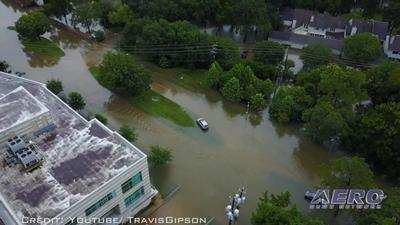
The Federal Aviation Administration closely monitors forecasted hurricanes and severe weather events and prepares FAA facilities and equipment to withstand storm damage. We prepare and protect air traffic control facilities along the projected storm path so we can quickly resume operations after the hurricane passes. Enabling flights to resume quickly is critical to support disaster relief efforts.

Because of Hurricane Florence, airlines are likely to cancel many flights in the direct path of the storm and the surrounding areas. Flights that are not cancelled may be delayed. Once Hurricane Florence makes ground fall, airports may be listed as “open” but flooding on local roadways may limit access to airports for passengers, as well as the employees who work for the airlines or at the airport. As a result, every aspect of your trip to the airport, including parking, checking in, getting through security and boarding may take longer than usual.

As always, check with airlines about the status of your flight before you leave for the airport.

FAA control towers in hurricane-prone areas are designed and built to sustain hurricane force winds. Each control tower has a maximum wind sustainability. When the winds approach that level, controllers evacuate the tower cabs. They may remain in the building on duty in a secure lower level, and are ready to go back to work as soon as the storm passes.

We also protect communications equipment and navigational aids to the greatest extent possible. As the storm approaches, we disable airport surveillance radar antennas to allow them to spin freely, minimizing potential wind damage. This limits damage to the antenna motors and allows radar coverage to resume quickly after the storm passes.

The FAA warns drone operators that they will be subject to significant fines that may exceed $20,000 and civil penalties if they interfere with emergency response operations. Flying a drone without authorization in or near the disaster area may violate federal, state, or local laws and ordinances, even if a TFR is not in place. Allow first responders to save lives and property without interference.

Standard check lists are even more important in and around severe weather. Be aware of weather conditions throughout the entire route of your planned flight. A pilot’s failure to recognize deteriorating weather conditions continues to cause or contribute to accidents.

(Source: FAA news release. Images from file)

FMI: www.faa.gov

Advertisement

More News

ANN's Daily Aero-Term (12.01.25): Convective SIGMET

Convective SIGMET A weather advisory concerning convective weather significant to the safety of all aircraft. Convective SIGMETs are issued for tornadoes, lines of thunderstorms, e>[...]

ANN's Daily Aero-Linx (12.01.25)

Aero Linx: United Flying Octogenarians WELCOME to a most extraordinary group of aviators, the United Flying Octogenarians (UFO). Founded in 1982 with just a handful of pilots, we h>[...]

NTSB Final Report: Remos Aircraft GmbH Remos GX

Pilot’s Decision To Attempt Takeoff With Frost Covering The Airplane’s Wings Analysis: The pilot of the light sport airplane was preparing to depart for a cross-country>[...]

Aero-News: Quote of the Day (12.02.25)

“We’ve paid for the cable line’s repair for the customer and have apologized for the inconvenience this caused them...” Source: Some followup info from an A>[...]

ANN's Daily Aero-Term (12.02.25): Coupled Approach

Coupled Approach An instrument approach performed by the aircraft autopilot, and/or visually depicted on the flight director, which is receiving position information and/or steerin>[...]

blog comments powered by Disqus



Advertisement

Advertisement

Podcasts

Advertisement

© 2007 - 2025 Web Development & Design by Pauli Systems, LC

