Next-Gen Engine Tech Highlights Show's Opening Day
 New engine technologies continue to dominate the news from
Farnborough. Following news of Pratt & Whitney's
PurePower engine family and
GE's launch of its "eCore" program, CFM
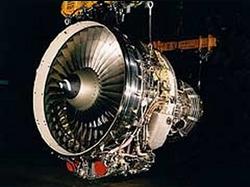
International announced Monday the launch of LEAP-X, an entirely
new baseline turbofan engine to power future replacements for
current narrow-body aircraft.
New engine technologies continue to dominate the news from
Farnborough. Following news of Pratt & Whitney's
PurePower engine family and
GE's launch of its "eCore" program, CFM
International announced Monday the launch of LEAP-X, an entirely
new baseline turbofan engine to power future replacements for
current narrow-body aircraft.
The engine will incorporate revolutionary technologies developed
over the last three years as part of the LEAP56 technology
acquisition program. The first full demonstrator engine is
scheduled to run in 2012, and LEAP-X could be certified by
2016.
CFM says the advanced new turbofan will reduce the engine
contribution to aircraft fuel burn by up to 16 percent compared to
current CFM56 Tech Insertion engines that power Airbus A320 and
Boeing Next-Generation 737 aircraft. Additional fuel burn
improvements will be achieved once this engine is paired with new
aircraft technology.
CFM International (CFM) is a 50/50 joint venture between Snecma
(SAFRAN Group) and General Electric Company. The two parent
companies have just signed an agreement renewing their partnership
until the year 2040, ensuring that all engines in the 18,000 to
50,000 pound thrust class developed in that timeframe will fall
under the CFM umbrella.
"When we launched the LEAP56 technology development program in
2005, fuel was at $1.30 a gallon," said Eric Bachelet. "Today,
airlines are paying nearly $4.00 a gallon. Our customers are
hurting and we are responding. LEAP56 is the single largest
investment in technology in our history; we are bringing the full
technical and financial resources of our parent companies to bear
to give them a solution: LEAP-X. We have set aggressive targets for
this engine, and the technology plan is in place to achieve
them."
The foundation of the LEAP-X engine is heavily rooted in
advanced aerodynamics, environmental, and materials technology
development programs. For more than 15 years, Snecma has been
developing composite fan blade technology. More recently, the
company has focused on the revolutionary three-dimensional, woven
resin transfer molding (3-DW RTM) technology that dramatically
reduces engine weight while providing a more durable blade.
 Development of Ceramic Matrix
Composite (CMC) technology has been underway at GE for more than 25
years. This ultra-light-weight material can support the extremely
high temperatures found in the high-pressure turbine.
Titanium-Aluminide (Ti-Aluminide), a lightweight alloy that has
been under development for the past 20 years, will also be
incorporated into the engine.
Development of Ceramic Matrix
Composite (CMC) technology has been underway at GE for more than 25
years. This ultra-light-weight material can support the extremely
high temperatures found in the high-pressure turbine.
Titanium-Aluminide (Ti-Aluminide), a lightweight alloy that has
been under development for the past 20 years, will also be
incorporated into the engine.
In late 2008, CFM will perform a series of full-scale fan
demonstrator engine tests with the 3-DW RTM fan blades being
developed as part of Snecma's MASCOT program. The engine will
complete extensive performance ground tests at Snecma facilities in
Villaroche, France, before being transported to GE's outdoor test
facility in Peebles, OH for acoustic and crosswind testing. This
innovative new composite technology reduces engine weight by
approximately 400 pounds and the fan blade count by 25 percent.
"We are excited about this new engine, but we also think we need
to remain flexible," said Bachelet. "If fuel prices continue to
rise, we will need to raise the bar even higher and introduce even
more advanced technology. For the next three years, we are pursuing
parallel paths: the LEAP-X advanced turbofan and the open rotor.
The foundational technologies support either architecture, and we
are making good progress toward finding solutions for the inherent
technical challenges of an open rotor configuration."
The first full core is scheduled to begin testing next year.
Hardware for the core, which features an eight-stage compressor and
single-stage turbine, is being produced now and the core is
targeted to fire by mid-2009. A second core test is also
planned.



 ANN's Daily Aero-Linx (12.12.25)


 See All