
Cessna 206 Jump Plane Goes Down... All Aboard Bail Out Safely | Aero-News Network
Aero-News Network
RSS icon RSS feed
podcast icon MP3 podcast
Subscribe Aero-News e-mail Newsletter Subscribe

Airborne Unlimited -- Most Recent Daily Episodes

Episode Date

Airborne-Monday

Airborne-Tuesday

Airborne-Wednesday Airborne-Thursday

Airborne-Friday

Airborne On YouTube

Airborne-Unlimited-12.01.25

AirborneNextGen-
12.02.25

Airborne-Unlimited-11.19.25

Airborne-AffordableFlyers-11.20.25

AirborneUnlimited-11.21.25

LIVE MOSAIC Town Hall (Archived): www.airborne-live.net

Mon, May 27, 2024

Cessna 206 Jump Plane Goes Down... All Aboard Bail Out Safely

7 Survive Tail Incapacitation... 6 jumpers and One Well-Prepared Pilot

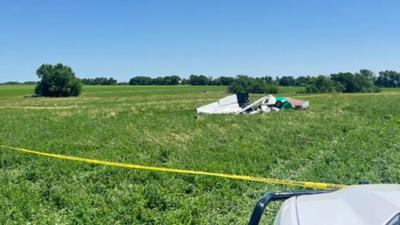
A Saturday afternoon jump run, originating from SkyDive Kansas City, went bad when it was reported that, "a Skydiver premature parachute deployment at 14,000 msl damaging the tail section." 

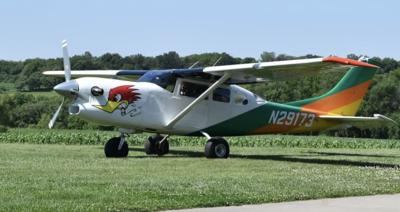
The turbine-upgraded Cessna 206, N29173, was abandoned by the pilot, who made a safe and successful jump, though the aircraft is a total loss. The parachute-equipped jump pilot exited the aircraft after all six jumpers had cleared the aircraft. 

The plane impacted in a field just east of Butler Memorial Airport in Butler, Missouri. Equipped with a Turbine Conversions Pratt Ltd Pratt & Whitney Canada PT6A-20 550 hp turbine conversion, the aircraft was carrying a full load of 6 jumpers along with the Pilot-In-Command. 

The Bates County Sheriff reported that EMS treated everyone involved, at the scene, and released them. Cessna 180 series and 206 series airplanes are staples at dropzones all over the country and turbine versions are particularly sought after due to their ability to climb, rapidly, to altitude and return ASAP to set up for another jump run. 

Inadvertent deployments of parachutes at close proximity to the airframe are a major hazard, and while such incidents are rare, a deployment over or through the tail of an aircraft can easily rip it from the rest of the airframe and make the aircraft uncontrollable. This is one of the reasons that most jump pilots are chute-equipped themselves (as they should be). 

We'll have more information when it becomes available. 

FMI: www.skydivekc.com

Advertisement

More News

ANN's Daily Aero-Term (12.01.25): Convective SIGMET

Convective SIGMET A weather advisory concerning convective weather significant to the safety of all aircraft. Convective SIGMETs are issued for tornadoes, lines of thunderstorms, e>[...]

ANN's Daily Aero-Linx (12.01.25)

Aero Linx: United Flying Octogenarians WELCOME to a most extraordinary group of aviators, the United Flying Octogenarians (UFO). Founded in 1982 with just a handful of pilots, we h>[...]

NTSB Final Report: Remos Aircraft GmbH Remos GX

Pilot’s Decision To Attempt Takeoff With Frost Covering The Airplane’s Wings Analysis: The pilot of the light sport airplane was preparing to depart for a cross-country>[...]

Aero-News: Quote of the Day (12.02.25)

“We’ve paid for the cable line’s repair for the customer and have apologized for the inconvenience this caused them...” Source: Some followup info from an A>[...]

ANN's Daily Aero-Term (12.02.25): Coupled Approach

Coupled Approach An instrument approach performed by the aircraft autopilot, and/or visually depicted on the flight director, which is receiving position information and/or steerin>[...]

blog comments powered by Disqus



Advertisement

Advertisement

Podcasts

Advertisement

© 2007 - 2025 Web Development & Design by Pauli Systems, LC

