AD 2021-21-06 Requires Removing Certain Part-Numbered Cooling Fans From Service
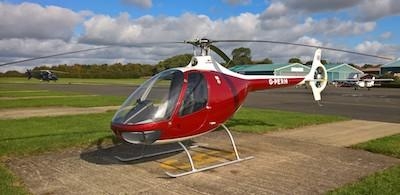
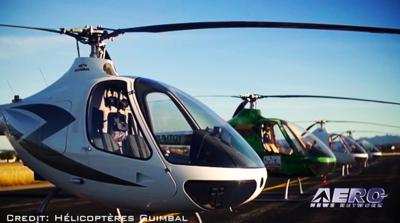
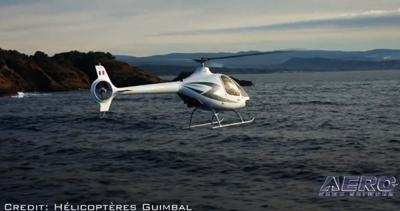
The FAA is adopting a new airworthiness directive (AD) for Hélicoptères Guimbal (HG) Model Cabri G2 helicopters with certain part-numbered aluminum cooling fans (cooling fan) installed.
This AD was prompted by a report of an occurrence of an in-flight shutdown due to a crack and subsequent failure of the cooling fan. This AD requires removing certain part-numbered cooling fans from service, or modifying certain part-numbered cooling fans before exceeding a certain total hours time-in-service (TIS), and installing newly designed cooling fans. This AD also prohibits installing any affected cooling fan on any helicopter. The FAA is issuing this AD to address the unsafe condition on these products. This AD is effective December 17, 2021.
Supplementary Information: The FAA issued a notice of proposed rulemaking (NPRM) to amend 14 CFR part 39 by adding an AD that would apply to Hélicoptères Guimbal (HG) Model Cabri G2 helicopters with a cooling fan part number P/N G52-00-000; or P/N G52-00-001 or P/N G52-04-100, if it is or has previously been mounted on a 12-hole engine pulley P/N G52-10-100 or P/N G52-10-101, installed. The NPRM published in the Federal Register on August 9, 2021 (86 FR 43449). In the NPRM, the FAA proposed to require removing from service any affected part-numbered cooling fan. As an alternative for certain part-numbered cooling fans, modifying the cooling fan before it exceeds a certain total hours TIS was proposed.
The NPRM was prompted by a series of EASA ADs beginning with EASA AD 2014-0038, dated February 14, 2014 (EASA AD 2014-0038), issued by EASA, which is the Technical Agent for the Member States of the European Union, to correct an unsafe condition for Hélicoptères Guimbal Model Cabri G2 helicopters. EASA advised of a report of an in-flight engine shutdown caused by a failure of the cooling fan. EASA further advised the failure of the cooling fan was caused by a crack in the fan external ring. After EASA AD 2014-0038 was issued, an occurrence was reported of an inflight failure caused by failure of the cooling fan, which was determined to be caused by a crack on the cooling fan front flange.
Accordingly, EASA issued EASA AD 2014-0196, dated September 2, 2014 (EASA AD 2014-0196), which retained the modification requirements of EASA AD 2014-0038 and required repetitive inspections of the engine cooling fan front flange and corrective actions depending on the findings. After EASA issued EASA AD 2014-0196, further analysis determined the crack propagation depends mainly on the engine start/stop (ESS) cycles. Therefore, EASA superseded EASA AD 2014-0196 with EASA AD 2016-0033, dated February 24, 2016 (EASA AD 2016-0033), which retained the inspection and modification requirements of EASA AD 2014-0196 and depending on the findings, required replacement of the affected part pending approval of the newly designed part.
After EASA issued EASA AD 2016-0033, HG developed a newly designed engine cooling fan P/N G52-04-101, which consists of composite materials having improved structural strength. Accordingly, EASA superseded EASA AD 2016-0033 with EASA AD 2017-0039, dated February 24, 2017 (EASA AD 2017-0039), which retained the requirements of EASA AD 2016-0033 and required replacing the affected cooling fans with the newly designed cooling fan which terminated the repetitive inspections from EASA AD 2016-0033. Since EASA issued EASA AD 2017-0039, HG issued a revision to its service bulletin requiring a life limit requirement for the replacement of the affected cooling fans. Accordingly, EASA superseded EASA AD 2017-0039 with EASA AD 2019-0187, dated July 31, 2019, and corrected August 2, 2019 (EASA AD 2019-0187). EASA AD 2019-0187 retains some of the requirements in EASA AD 2017-0039 and requires a new compliance time and life limit for the replacement of the affected part. EASA AD 2019-0187 also removes the
modification and inspection requirements which are covered by EASA AD 2019-0025, dated February 4, 2019.
The unsafe condition described in the EASA ADs, if not addressed, could result in failure of the cooling fan and subsequent engine in-flight shut-down and reduced control of the helicopter.



 ANN's Daily Aero-Linx (12.12.25)


 See All