Wed, Feb 07, 2018
Finds Federal Law Preempts State Fee Mandate
The Austin Court of Appeals has just issued a decision in a case involving the sky-high prices that air ambulances charge Texas workers' compensation insurers.
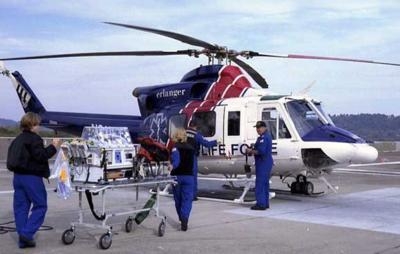
Workers' compensation insurance is a heavily regulated line of insurance. In fact, the state-mandated insurance policy requires workers' compensation insurers to pay lifetime medical costs for injured workers, but also mandates that they pay whatever state law requires. State law, in turn, requires that the Texas Department of Insurance (TDI) develop a fee schedule designed, among other things, to contain medical costs and not cross-subsidize any other payors. TDI enforced the payment of 125 percent of Medicare for payments to air ambulances. The air ambulances challenged this fee based on a federal law that deregulated the commercial airline industry so that those airlines could compete on price for travelers and shipping. The air ambulances use this law to attempt to recover their full billed charges (which are often 500 percent or more of their costs).
The appellate court agreed with the air ambulances on one thing: that the federal law preempts the state fee mandate. However, the court did not order the insurers to pay billed charges. In finding that the Airline Deregulation Act applied, the court relied on several cases from other jurisdictions that reach the same result (although many of them are still on appeal). And none of these courts has ordered insurers to pay billed charges either. In fact, if in the end the state laws are actually preempted by a federal act, participants face a void: no court would have apparent authority to order the insurers to pay anything other than their contractual obligation to pay state-set charges.
“The struggle to contain sky-high air ambulance prices continues in many contexts, as it will in this one,” Mary Nichols, senior vice president and general counsel for Texas Mutual, said. “The Texas workers' compensation system is one of the best in the nation, due to its carefully designed balance of interests. Inserting unlimited medical costs into that system does serious damage to the system, and thus to those conscientious employers of Texas who choose to protect their workers with workers' compensation insurance.”
(Source: Texas Mutual news release. Image from file)
More News
Cooperative Surveillance Any surveillance system, such as secondary surveillance radar (SSR), wide-area multilateration (WAM), or ADS-B, that is dependent upon the presence of cert>[...]
Aero Linx: OX5 Aviation Pioneers Incorporated in 1955 as a Pa 501 (c)(3) Not for Profit Corporation, the OX5 Aviation Pioneers is dedicated to bringing before the public the accomp>[...]
The Pilot Appeared To Regain Control After Six Rotations And Attempted To “Fly Out” Inverted But Had Insufficient Altitude On November 8, 2025, at 1038 eastern standard>[...]
From 2018 (YouTube Edition): Aero-News Talks With The Airplane's Builder One of the many unique airplanes at AirVenture 2018 was a 1/3-scale B-17 bomber built by Jack Bally, who ta>[...]
Aero Linx: Society of U.S. Army Flight Surgeons (SoUSAFS) The Society of US Army Flight Surgeons (SoUSAFS) serves to advance the science and art of Aerospace Medicine and its allie>[...]



 ANN's Daily Aero-Term (12.04.25): Cooperative Surveillance


 See All